In today's fast-paced industrial environment, efficiency is key. Forklifts play a crucial role in logistics and warehouse management. A significant innovation in this sector is the adoption of lithium batteries. Many companies are asking why lithium batteries are used in modern forklifts. Their growing popularity highlights their advantages over traditional lead-acid counterparts.
Lithium batteries offer several compelling benefits. They charge faster and last longer, which can boost productivity. Maintenance is often simpler, making them reliable. However, some might question their initial cost. While upfront prices can be higher, the long-term savings are undeniable. Businesses must weigh these factors carefully.
Incorporating lithium batteries into forklifts represents a major shift. This transition encourages discussions about sustainability and performance. As industries strive for greener solutions, lithium batteries present a promising option. Balancing cost and efficiency remains a challenge, yet the advantages suggest lithium is the future for modern forklifts.
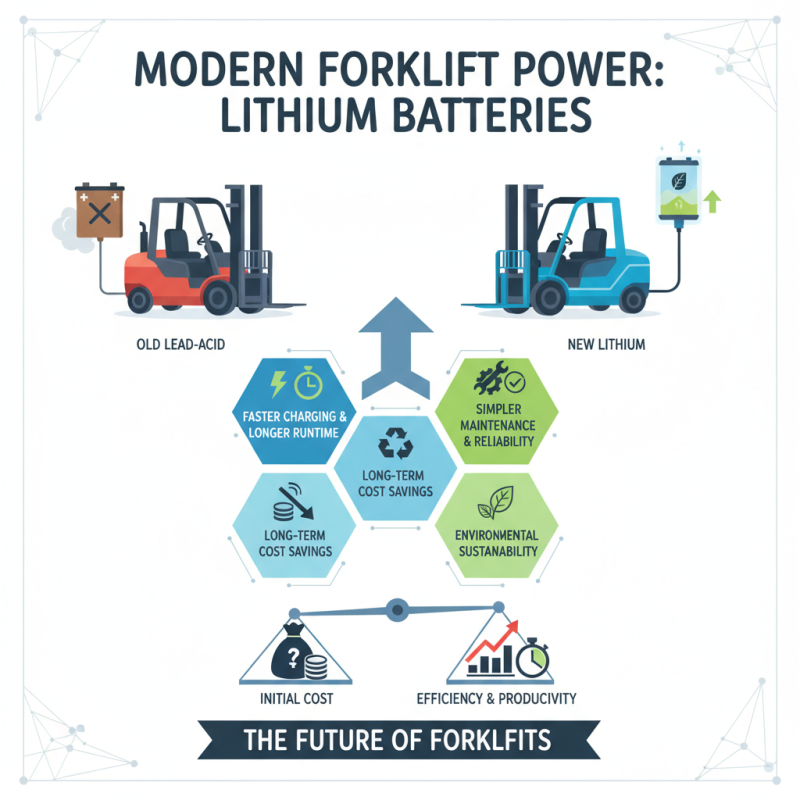
Lithium batteries are transforming the forklift industry with their impressive efficiency. They charge faster than traditional lead-acid batteries, significantly reducing downtime. A typical lithium battery can reach an 80% charge in just one hour. This helps maintain continuous operations, especially in busy environments.
Another key advantage is their longer lifespan. Lithium batteries typically last two to three times longer than lead-acid alternatives. This means less frequent replacements and lower maintenance costs. They also operate at a wider temperature range, maintaining performance in various conditions. Forklift operators can benefit from this reliability in warehouses or outdoor settings.
However, it’s important to acknowledge the initial higher cost of lithium batteries. This can be a barrier for some businesses. Companies must weigh upfront investment against long-term savings. While the transition to lithium offers numerous advantages, careful financial planning is essential for effective implementation.
Lithium battery technology is transforming forklift operations. A report by the Industrial Truck Association reveals that companies can reduce operational costs by up to 30% when switching to lithium batteries. This significant savings comes from lower maintenance needs and reduced downtime.
Lithium batteries offer faster charging times. Most can be fully charged in under two hours. This allows for more flexible usage throughout the day. Additionally, these batteries deliver consistent power without the drop-off typical in lead-acid batteries. As a result, companies can run operations more smoothly, leading to increased productivity.
However, not all facilities are equipped for quick-charging setups. Some businesses may find the initial investment daunting. It’s crucial to assess the integration of lithium batteries into existing systems. While the benefits are evident, the transition may require careful planning and investment strategies to maximize their potential.
When comparing lithium batteries to lead-acid batteries in warehousing, several key factors emerge. Lithium batteries offer a longer lifespan, typically lasting up to 5,000 charge cycles, while lead-acid batteries average only 1,500 cycles. This significant difference in longevity can translate to lower replacement costs and reduced downtime for businesses. According to industry studies, lithium batteries also charge faster, reaching an 80% charge in just one hour, whereas lead-acid options can take up to eight hours.
Efficiency is another important consideration. Lithium batteries maintain a higher discharge rate, providing consistent power to forklifts without the drop-off associated with lead-acid batteries. This leads to improved performance in warehouse operations, particularly during peak hours. A recent report from a logistics organization noted that companies utilizing lithium technology saw productivity increases of up to 25%.
Tips: Consider your operational needs before making a battery choice. Analyze the charging time and lifecycle costs. Understand that while lithium batteries are an investment, the long-term savings can offset initial costs. A mix of technologies might suit some businesses better. Each option has its strengths but assessing them correctly is vital.
Lithium batteries are gaining traction in material handling for their environmental benefits. Unlike lead-acid batteries, lithium batteries generate less greenhouse gas during production. They also have a longer lifespan, which means fewer batteries are discarded. This translates into reduced waste and lower demand for raw materials.
The energy efficiency of lithium batteries enhances overall operational sustainability. They charge faster and offer greater energy density. This allows forklifts to operate longer on a single charge, minimizing downtime. The reduction in charging frequency leads to lower energy consumption.
However, not every aspect is perfect. The initial investment in lithium batteries can be higher. Organizations must weigh the long-term savings against upfront costs. Decommissioning lithium batteries presents challenges as well. As technology evolves, creating more robust recycling processes is essential. Reflecting on these factors is crucial for companies to make informed decisions.
| Feature | Lithium Batteries | Lead-Acid Batteries |
|---|---|---|
| Lifecycle | Up to 5,000 cycles | Approx. 1,500 cycles |
| Charge Time | 1-2 hours | 8-12 hours |
| Weight | 30-40% lighter | Heavier |
| Environmental Impact | Reduced emissions | Higher emissions |
| Maintenance | Minimal | Regular maintenance needed |
| Performance in Extreme Temperatures | Good | Poor |
| Cost Over Lifespan | Lower total cost | Higher total cost |
Lithium batteries are rapidly transforming forklift applications. Industry reports indicate that nearly 40% of warehouses have shifted to lithium technology as of 2023. This increasing adoption links directly to advancements in battery efficiency and energy density. Modern lithium batteries deliver up to 30% more energy compared to traditional lead-acid counterparts. This means forklifts can operate longer shifts without downtime for battery changes or charging.
Future trends indicate a growing emphasis on sustainability and safety. Analysts predict that by 2025, over 50% of global forklift fleets will be powered by lithium-ion batteries. One challenge lies in recycling these batteries effectively. Current processes are not fully optimized, raising questions about long-term environmental impact. However, innovation in battery chemistries aims to address these concerns. Research is ongoing to enhance durability while reducing raw material dependency.
Safety enhancements are also a focus. Sophisticated monitoring systems are emerging, boosting operational efficiency. Data show that lithium batteries can maintain consistent performance under diverse temperatures. Yet, they require careful handling to mitigate risks of thermal runaway. There remains a need for continuous education and training within the industry to ensure that personnel are well-prepared for these advanced systems.
: Companies can reduce operational costs by up to 30% with lithium batteries.
Most lithium batteries can be fully charged in under two hours.
Lithium batteries produce less greenhouse gas and have a longer lifespan, reducing waste.
Some may find the investment daunting and initial setups require careful planning.
Lithium batteries deliver consistent power and are more energy dense, reducing downtime.
They need careful handling to avoid risks like thermal runaway, requiring training.
Current recycling processes are not fully optimized, raising environmental concerns.
Focus on sustainability and advanced monitoring systems is driving the next developments.
They charge faster and operate longer, leading to reduced overall energy needs.
Weighing long-term savings against upfront costs is crucial for informed decision-making.
Lithium batteries are increasingly favored in modern forklifts due to their numerous advantages in efficiency and lower operating costs. The inherent characteristics of lithium batteries allow for faster charging and longer lifespan compared to traditional lead-acid batteries. This efficiency not only enhances productivity within warehousing operations but also translates into significant savings on maintenance and energy expenses. Additionally, lithium batteries produce fewer emissions, contributing to a more sustainable material handling environment.
The growing trend of adopting lithium battery technology in forklifts reflects an industry shift towards greater performance and environmental responsibility. As advancements continue in lithium battery development, their role in optimizing forklift applications is likely to expand further, solidifying the reasons why lithium batteries are used in modern forklifts. This ongoing evolution promises enhanced operational benefits and a more environmentally friendly approach to logistics and warehousing.

IDD Motion