Why Do Industries Rely on Warehouse Transport Equipment?

Time:2026-09-17 Author:Ethan
0%

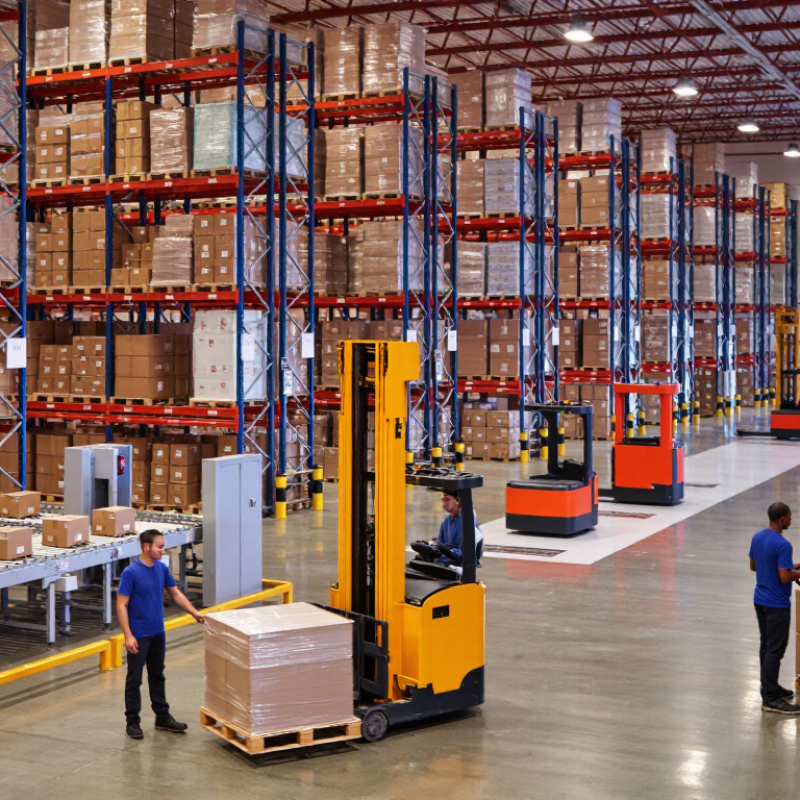
Warehouse transport equipment keeps goods moving through busy facilities with less delay and physical strain. Forklifts, pallet jacks, conveyors, and automated guided vehicles support different stages of internal handling. They move cartons from receiving docks to storage aisles, then toward packing stations and shipping doors. Every minute matters.

The question “what industries rely on warehouse transport equipment” reaches far beyond retail. Food distributors use pallet trucks to handle chilled products quickly. Automotive plants depend on tugger trains and conveyors for timed component delivery. Pharmaceutical warehouses require controlled movement and careful tracking. E-commerce operations often combine scanners, sortation systems, and mobile robots to manage thousands of orders daily. These examples show how equipment choices depend on product weight, aisle width, storage design, and delivery speed.

Experienced warehouse teams usually assess workflow before purchasing machinery. A powerful forklift may seem efficient, yet it can waste space in narrow aisles. A conveyor may reduce lifting, but poor placement can create bottlenecks. That detail is easy to miss. Maintenance records, operator training, battery performance, and floor conditions also affect dependable results. Safety remains central, especially near loading bays, blind corners, and pedestrian routes.

No single transport system fits every industry. A smaller warehouse may gain more from reliable pallet jacks than expensive automation. Larger facilities may justify integrated systems after studying order volume and labor patterns. The strongest decisions combine measurable performance with practical experience. Even then, conditions change. Equipment plans should be reviewed as products, staffing, and customer expectations evolve.

Why Do Industries Rely on Warehouse Transport Equipment?

What Warehouse Transport Equipment Includes

Warehouse transport equipment includes every system that moves goods inside a facility. It is not limited to forklifts. Common equipment includes pallet trucks, reach trucks, conveyors, pallet shuttles, automated guided vehicles, autonomous mobile robots, sortation units, and vertical lifts. Each tool supports a different movement pattern. Conveyors carry cartons between fixed zones. Forklifts handle heavier loads near storage racks. Mobile robots move shelves, totes, or pallets across changing routes.

The MHI 2024 Annual Industry Report found that 55% of supply chain professionals planned to increase technology investment. This figure reflects growing pressure for faster, more measurable internal transport. Yet automation is not always the best answer. A narrow aisle may suit a compact vehicle, while uneven floors can reduce stability and accuracy. In warehouse assessments, small details matter: wheel condition, turning radius, battery charging space, and pedestrian visibility. They are easy to overlook. The U.S. Bureau of Labor Statistics continues to record serious workplace risks involving industrial trucks, reinforcing the need for operator training and traffic controls. Equipment must match the load, layout, and workforce. That judgment is sometimes imperfect. A highly automated system can still create delays when sensors fail, software settings drift, or staff lack practical training. Data from the 2024 MHI report also shows that implementation depends on integration, skills, and reliable operational information, not equipment alone.

Why Do Industries Rely on Warehouse Transport Equipment? - What Warehouse Transport Equipment Includes

Equipment Type Primary Warehouse Function Typical Load Capacity Typical Lift or Travel Range Common Power Source Main Operational Benefit
Manual Pallet Truck Moving palletized goods short distances on the warehouse floor Approximately 2,000–5,500 lb (900–2,500 kg) Floor-level handling; no powered lift Manual operation Low purchase and maintenance cost for basic horizontal transport
Powered Pallet Truck Transporting pallets over short and medium distances Approximately 3,000–8,000 lb (1,400–3,600 kg) Floor-level handling; some models include low lift Rechargeable battery Reduces manual pushing and supports higher handling frequency
Counterbalance Forklift Loading, unloading, stacking, and moving heavy palletized materials Approximately 3,000–15,000 lb (1,400–6,800 kg) Typical lift heights of 10–20 ft (3–6 m) Electric battery, LPG, diesel, or gasoline Versatile handling across receiving docks, storage areas, and shipping zones
Reach Truck Placing and retrieving pallets in narrow-aisle, high-bay storage Approximately 2,500–5,500 lb (1,100–2,500 kg) Often up to 30–40 ft (9–12 m), depending on configuration Rechargeable battery Improves vertical space utilization and supports narrower aisles
Electric Stacker Lifting and stacking pallets in light- to medium-duty storage areas Approximately 2,000–4,000 lb (900–1,800 kg) Commonly 8–16 ft (2.5–5 m) Rechargeable battery Provides powered vertical handling where a full-size forklift is unnecessary
Order Picker Picking individual cartons or items from multi-level shelving Approximately 1,000–3,000 lb (450–1,400 kg) Commonly 10–30 ft (3–9 m) platform height Rechargeable battery Improves access to piece-picking locations and high-level inventory
Conveyor System Continuous movement of cartons, totes, parcels, and pallets between fixed workstations Designed according to product size and line load; commonly handles individual cartons to full pallets Fixed route; speed commonly about 50–600 ft/min (15–183 m/min) Electric motor Creates predictable, high-throughput material flow with less manual carrying
Warehouse Cart or Trolley Moving picked items, tools, containers, and light materials between work areas Approximately 500–2,000 lb (225–900 kg), depending on design Floor-level transport Manual or battery-assisted Flexible point-to-point movement for order picking and internal replenishment
Automated Guided Vehicle (AGV) Repetitive movement of pallets, racks, or carts along programmed routes Approximately 1,000–6,000 lb (450–2,700 kg), depending on vehicle type Floor-level travel; route-dependent navigation Rechargeable battery Automates repeatable transport and can improve movement consistency
Autonomous Mobile Robot (AMR) Dynamically transporting shelves, totes, carts, or orders between flexible locations Commonly 100–3,000 lb (45–1,400 kg), depending on platform design Floor-level travel with software-managed routing Rechargeable battery Supports flexible workflows and reduces unnecessary walking or manual transport

Note: Capacities, lift heights, and travel speeds are representative industry ranges. Actual ratings depend on equipment configuration, load center, mast height, operating environment, floor conditions, and applicable safety requirements.

How Warehouse Transport Equipment Supports Material Movement

Warehouse transport equipment keeps materials moving between receiving docks, storage areas, workstations, and shipping zones. It includes conveyors, pallet trucks, stackers, carts, and automated guided vehicles. Each tool reduces unnecessary walking, lifting, and waiting. That matters when one delayed pallet can interrupt an entire production line.

The MHI 2024 Annual Industry Report found that 43% of supply chain professionals planned to adopt robotics and automation within two years. This trend reflects a practical problem: warehouses handle more orders with limited labor availability. Conveyors can transfer cartons at a steady pace, while lift equipment positions pallets on higher racks. In a busy facility, these movements create a visible rhythm—wheels turning, scanners beeping, and containers arriving at the correct station.

Safety remains equally important. The U.S. Bureau of Labor Statistics continues to identify transportation and material-moving work as a major employment category, where manual handling can create ergonomic risks. Properly selected equipment can reduce carrying distances and improve load control. However, automation is not automatically better. Poor layout planning may create congestion, blind corners, or new maintenance delays. That weakness is easy to underestimate. Experienced operators still need training, inspections, and clear traffic rules. The equipment supports human decisions; it does not replace them.

Why Industries Depend on Warehouse Transport Equipment

Why Do Industries Rely on Warehouse Transport Equipment?

Industries depend on warehouse transport equipment because production rarely happens beside storage shelves. A pallet jack moves loaded pallets across short distances without starting a forklift. Conveyors carry cartons between receiving, picking, packing, and dispatch areas. This steady movement reduces waiting time and keeps workers focused on inspection, assembly, or order accuracy. In a busy facility, every blocked aisle can delay several downstream tasks. Small delays become expensive.

Equipment also supports safer and more predictable handling. Lift tables reduce awkward bending, while powered vehicles help control heavier loads. Guardrails, emergency stops, visible load ratings, and scheduled inspections matter as much as speed. Experienced supervisors match each machine to floor conditions, aisle width, load shape, and operator training. A narrow cart may handle cartons well but fail with unstable drums. That detail is easy to miss.

Reliability comes from disciplined maintenance, not impressive machinery alone. Warehouse observations often reveal worn wheels causing vibration, noise, and uneven stacks before failure becomes obvious. Cleaning sensors and checking brakes can prevent interruptions, although maintenance schedules are sometimes treated as paperwork. That is a weak habit.

No transport system is flawless. Manual handling still appears when pallets are damaged or orders change suddenly. These exceptions deserve planning, not blame. Clear procedures, recorded inspections, and practical worker feedback help industries adapt equipment to real working conditions.

Key Benefits for Efficiency, Safety, and Cost Control

Warehouse transport equipment improves efficiency by controlling repetitive movement. Pallet trucks, stackers, conveyors, and guided vehicles reduce walking, waiting, and manual lifting. That matters when each order crosses the floor several times. The 2024 MHI Annual Industry Report identifies automation and robotics as major investment priorities across supply chains. However, investment alone does not create efficiency. Poor slotting can still make expensive equipment travel empty.

Safety remains a practical reason to mechanize transport. The U.S. Occupational Safety and Health Administration estimates that powered industrial trucks cause about 85 fatal accidents and 34,900 serious injuries annually. Properly selected equipment can reduce lifting strain, stabilize loads, and separate pedestrian routes. It cannot replace training or supervision. The U.S. Bureau of Labor Statistics recorded 4.8 recordable injury and illness cases per 100 full-time workers in transportation and warehousing during 2023. A faster operation is not always a safer one.

Cost control depends on the whole workflow. Equipment reduces labor hours, product damage, and avoidable handling, but maintenance and battery costs remain real. Energy-efficient charging schedules can help, especially during long shifts. Yet many facilities measure purchase price first and downtime later. That is a costly blind spot.

Operators should review travel distance, loading frequency, aisle width, repairs, and near-miss records before choosing equipment. Small operational data often reveals the larger expense.

How Businesses Choose the Right Warehouse Transport Equipment

Choosing warehouse transport equipment starts with the work, not the catalogue. Managers should measure load weight, aisle width, travel distance, floor conditions, and daily order peaks. A compact pallet truck may suit short movements, while forklifts or automated guided vehicles may support longer routes. The wrong choice creates delays, damaged pallets, and crowded corners.

Industry data shows why this decision deserves careful testing. The 2024 MHI Annual Industry Report found that 55% of supply chain professionals planned to increase investment in technology and innovation. However, investment does not guarantee improvement. The International Federation of Robotics reported 541,302 industrial robots were installed worldwide in 2023, but warehouse needs differ from factory needs. A machine must match traffic patterns, operator skills, charging access, and maintenance capacity.

Total cost matters more than purchase price. Teams should compare energy use, tires, batteries, training, downtime, and expected service life. Safety checks also need real observation. Watch an operator turn with a full load, not just review a specification sheet. A useful pilot can reveal blind spots.

Small details matter.

A clear route may become blocked at 3 p.m. A battery may perform poorly in a cold area. Data can also be incomplete, especially when seasonal demand changes quickly. Managers should record travel time, near misses, damaged goods, and equipment availability during trials. The best equipment is not always the most advanced. It is the option workers can use safely, consistently, and efficiently under actual warehouse pressure.

FAQS

What does warehouse transport equipment include?

It includes pallet trucks, forklifts, conveyors, mobile robots, pallet shuttles, sorters, and vertical lifts.

How does equipment support daily warehouse movement?

Conveyors move cartons between fixed zones. Vehicles carry heavier loads near storage racks.

Is automation always the best solution?

No. Narrow aisles, uneven floors, sensor failures, and limited training can reduce its value.

Why do warehouses depend on transport equipment?

Storage and production areas are rarely beside each other. Equipment reduces waiting between receiving, picking, packing, and dispatch.

What details should managers check before choosing equipment?

Check aisle width, turning radius, load shape, floor condition, wheel quality, battery space, and pedestrian visibility.

How can equipment improve workplace safety?

Lift tables reduce awkward bending. Guardrails, emergency stops, inspections, and visible load ratings add protection.

Why is operator training important?

Industrial vehicles can create serious risks. Workers need practical training, traffic rules, and clear pedestrian controls.

What maintenance problems commonly affect warehouse equipment?

Worn wheels may cause vibration, noise, and uneven stacks. Dirty sensors and weak brakes can create interruptions.

Can manual handling still be necessary?

Yes. Damaged pallets or changed orders may require manual work. Planning these exceptions is better than blaming workers.

What makes a transport system reliable?

Reliable systems combine suitable equipment, skilled workers, accurate information, and disciplined maintenance. Impressive machinery alone is not enough.

Conclusion

Warehouse transport equipment includes forklifts, pallet trucks, conveyors, stackers, carts, lift platforms, and automated guided vehicles designed to move, lift, store, and organize materials within warehouses and distribution facilities. These tools support the smooth transfer of raw materials, inventory, packages, and finished products between receiving areas, storage locations, picking stations, and shipping docks. By reducing manual handling and improving workflow coordination, they help businesses maintain steady operations and respond efficiently to changing demand.

Understanding what industries rely on warehouse transport equipment reveals its broad importance across manufacturing, retail, logistics, food processing, construction supply, and many other sectors. Companies depend on this equipment to improve productivity, enhance workplace safety, reduce product damage, and control labor and operating costs. When selecting suitable equipment, businesses should consider load capacity, warehouse layout, lifting height, travel distance, power source, maintenance needs, operator training, and future growth. The right combination can create a safer, faster, and more cost-effective material movement system.

Ethan

Ethan

Ethan is a seasoned marketing professional with a deep expertise in our company's innovative product line. With a passion for sharing knowledge and insights, he takes the lead in regularly updating our corporate blog, where he explores industry trends, product features, and effective marketing......