In the evolving landscape of warehouse operations, efficiency is paramount. Experts continually emphasize the importance of minimizing disruptions. John Smith, a logistics consultant, once said, “Reducing downtime is the key to boosting warehouse productivity.” His insight resonates deeply in today's fast-paced environment, where every second counts.
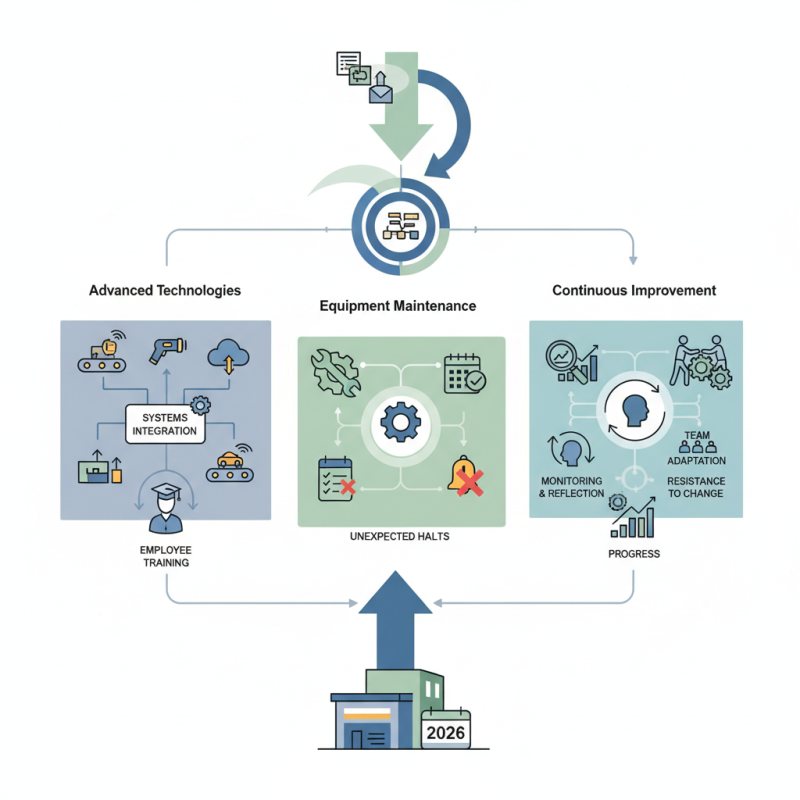
Understanding how to reduce downtime in warehouse operations requires a multifaceted approach. Implementing advanced technologies can streamline processes. However, integrating these systems often presents challenges. Employees need adequate training to adapt to new tools. Additionally, maintaining equipment can be overlooked, leading to unexpected halts in productivity.
Even with the best strategies, continuous monitoring and reflection are essential. Organizations may not always achieve their desired efficiency. Some teams might resist change, hampering progress. The journey to reducing downtime is ongoing. By valuing professional input, such as John's, companies can enhance their operations and thrive in 2026 and beyond.
In analyzing current downtime in warehouse operations, it's vital to understand its sources. A report from the Warehousing Education and Research Council indicates that nearly 35% of downtime is caused by equipment failures. Regular maintenance schedules are crucial. However, many warehouses fail to prioritize this, leading to avoidable delays.
Employee training is another area that needs attention. Poorly trained staff can lead to errors, resulting in significant downtime. Studies show that effective training programs can reduce downtime by up to 30%. Yet, only about 50% of warehouses invest sufficiently in ongoing training. This gap highlights a critical area for improvement.
Data analysis tools can provide insights into operation inefficiencies. Implementing software solutions allows for real-time monitoring of warehouse activities. Many facilities report that data-driven decisions decreased downtime by 20%. However, challenges remain. A significant number of warehouses still rely on outdated processes, hindering their ability to adapt to modern analytical methods. Understanding these dynamics will shape strategies for 2026 and beyond.
Warehouse operations face constant challenges. Reducing downtime is crucial for enhancing productivity. Implementing automation technologies can significantly mitigate these issues. Robotic systems, for instance, can streamline picking and sorting processes.
These machines work tirelessly, minimizing errors and speeding up order fulfillment.
A practical tip is to invest in an automated inventory management system. Such systems provide real-time data on stock levels. This ensures products are always ready for shipment. Make sure to train staff adequately on these tools. Human oversight is still necessary to manage any unexpected issues.
Consider using mobile robots for transport within the warehouse. They can move goods quickly without human intervention. This can reduce bottlenecks commonly seen in busy operations. Reflect on how often manual processes lead to delays. Implementing automation can help identify and rectify these inefficiencies effectively.
Training warehouse staff plays a crucial role in reducing downtime. According to a 2022 report by the Warehousing Education and Research Council, companies with structured training programs see a 30% lower error rate. Effective training enhances skills and helps in streamlining workflows.
Workforce training should focus on operations specific to the warehouse. Regular workshops on inventory management can improve accuracy when handling stock. Moreover, scenario-based training minimizes mistakes during peak times. Statistics show that 80% of downtime is a result of operator errors. Timely training sessions can directly impact productivity.
Companies often overlook the importance of ongoing training. Many fail to update training materials according to new technologies or processes. This can lead to confusion among staff. A review of training outcomes is essential; without it, inefficiencies persist. Investing in training is an investment in future efficiency, reducing overall downtime significantly.
| Training Program | Duration (Hours) | Cost ($) | Error Reduction (%) | Expected Downtime Reduction (%) |
|---|---|---|---|---|
| Basic Operations Training | 5 | 500 | 15 | 10 |
| Advanced Technology Integration | 10 | 1000 | 25 | 20 |
| Safety and Compliance Training | 3 | 300 | 10 | 5 |
| Leadership and Management Skills | 8 | 800 | 20 | 15 |
| Workflow Optimization Techniques | 6 | 600 | 30 | 25 |
Efficient inventory management is key to reducing downtime in warehouse operations. By optimizing stock levels and improving turnover rates, businesses can eliminate bottlenecks that slow down processes. A well-organized inventory system helps ensure that items are easy to find, leading to quicker order fulfillment.
Tips for optimization include implementing a thorough inventory audit process. Regular audits help identify slow-moving items, allowing you to adjust purchasing strategies. Automating inventory tracking through technology can enhance accuracy in stock levels, making it easier to forecast demand.
Creating clear workflows is another crucial aspect. Define roles and responsibilities for personnel involved in inventory handling. This reduces confusion and increases accountability. Consider using visual indicators, like color-coded systems, to streamline these workflows and improve response times in essential operations.
In 2026, reducing downtime in warehouse operations is more crucial than ever. Data analytics has emerged as a vital tool for proactive downtime prevention. According to a recent report by the Warehousing Association, downtime can account for up to 30% of total operational costs. This statistic underscores the potential savings that effective data analytics can provide.
By leveraging real-time data, warehouses can identify patterns and predict equipment failures before they occur. A study from the Logistics Institute found that companies using predictive analytics reduce downtime by 25%. This data highlights the importance of investing in quality analytics tools. However, many warehouses still rely on outdated systems, lacking the ability to process modern data streams.
Moreover, integrating data analytics is not just about technology. It requires a cultural shift. Employees must be trained to understand the insights generated by analytics. This training often gets overlooked but is essential for realizing the benefits of any new system. Continuous improvement should focus on both tech and human factors. This dual approach can help warehouses reduce downtime more effectively.
This chart illustrates the various causes of downtime in warehouse operations projected for 2026, quantified in hours. Understanding these causes can enable warehouses to implement proactive data-driven strategies to reduce overall downtime.
: Training reduces downtime and lowers error rates by 30%.
It minimizes mistakes during busy periods and improves performance.
Ongoing training keeps staff updated on new processes and technologies.
Outdated materials can confuse staff, leading to inefficiencies.
Effective inventory management streamlines processes and speeds up order fulfillment.
Conduct regular audits to identify slow-moving items.
Automation improves accuracy and helps forecast demand effectively.
Clear roles reduce confusion and enhance accountability among staff.
Color-coded systems can visually indicate processes and improve efficiency.
Proper stock levels ensure items are easy to find and processes flow smoothly.
To effectively address how to reduce downtime in warehouse operations, it is essential to first analyze the current causes of downtime. This involves identifying inefficiencies and potential setbacks in the workflow. Implementing automation technologies can significantly enhance operational efficiency, allowing for smoother processes and reduced human error. Furthermore, staff training is crucial in minimizing mistakes and ensuring that all team members are adept at maintaining workflow.
Additionally, optimizing inventory management is vital to prevent bottlenecks that can hinder operations. By utilizing data analytics, warehouse managers can take a proactive approach in predicting and preventing potential downtimes. Overall, adopting these strategies in 2026 will lead to streamlined operations, ultimately reducing downtime and increasing productivity in warehouse settings.

IDD Motion