How to Optimize Warehouse Storage Space Effectively?

Time:2026-05-09 Author:Henry
0%

In the fast-evolving landscape of logistics, the question of how to optimize storage space in a warehouse is paramount. Industry expert Sarah Thompson, a key figure at Warehousing Solutions Inc., emphasizes, "Investing in smart storage techniques can significantly enhance warehouse efficiency." This insight highlights the need for innovative strategies to maximize limited space.

Creating an effective storage system requires attention to detail. Many warehouses struggle with mismanagement of inventory, leading to wasted space. It’s crucial to assess the layout and storage methods regularly. Implementing vertical storage can free up floor space, while also keeping items easily accessible.

However, achieving the perfect balance can be challenging. Some warehouses may overlook the importance of categorizing inventory, causing clutter and inefficiency. Reflecting on these practices can drive improvement. Ultimately, understanding how to optimize storage space in a warehouse is not just about filling every inch; it’s about creating a functional and streamlined environment.
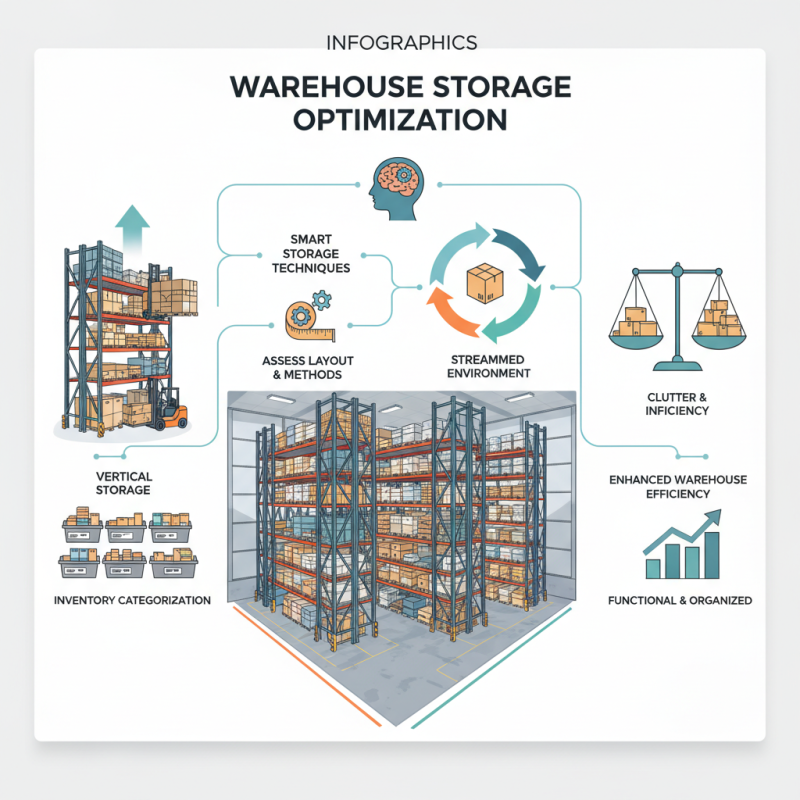
How to Optimize Warehouse Storage Space Effectively?

Understanding Warehouse Storage Space Optimization Techniques

Warehouse storage space optimization is crucial for operational efficiency. According to a report from the Warehousing Education and Research Council, effective space utilization can enhance storage capacity by 30-50%. Utilizing vertical space in warehouses is a key method. Employing tall shelving units allows businesses to store more without needing additional floor space.

Implementing a systematic approach to inventory management can also yield significant benefits. Utilizing inventory management software helps track stock levels in real-time. A study by the Logistics Management found that 60% of warehouses reported faster order fulfillment rates with organized inventory systems. This means less time wasted on searching for products.

**Tips**: Regular audits of stock can identify slow-moving items which take up valuable space. Also, consider utilizing dynamic shelving systems that adapt to changing inventory needs. Finally, ensure that aisles are optimally configured to allow for efficient picking and restocking. Space optimization is an evolving challenge that requires ongoing evaluation and adjustment.

How to Optimize Warehouse Storage Space Effectively?

Optimization Technique Description Benefits Estimated Space Savings (%)
Vertical Storage Utilizing vertical space by using high racks and shelves. Increases storage capacity without expanding the footprint. 30%
Mobile Shelving Moving shelving systems that can be compacted to save space. Maximizes storage density and reduces aisle space. 40%
Drawer Storage Using drawers for small items to reduce wasted space. Enhances organization and accessibility of inventory. 20%
Cross-Docking Processing incoming and outgoing shipments simultaneously. Reduces storage time and frees up space quickly. 25%
Inventory Management Systems Software solutions to track and manage inventory efficiently. Reduces overstock and optimizes order fulfillment. 15%

Importance of Vertical Space Utilization in Modern Warehousing

In modern warehousing, utilizing vertical space is crucial. According to a report by the Warehouse Education and Research Council (WERC), about 40% of warehouse space goes unused due to inefficient storage methods. By maximizing vertical storage, companies can increase their capacity significantly. Using shelves that reach the ceiling can free up valuable floor space for other operations.

Forklift access and safety remain concerns when considering vertical systems. Still, innovations in automated storage solutions are addressing these issues. For instance, automated storage and retrieval systems can store items up to 30% more efficiently than traditional methods. Even with narrow aisles, these systems ensure safe and quick order picking. Companies often overlook the potential of vertical space due to a lack of planning or investment.

However, transitioning to vertical storage isn't always easy. Existing layouts may require redesign, creating downtime and temporary disruptions. Warehouse operators must thoughtfully evaluate their current inventory management systems. Failure to do so could lead to wasted space and increased operational costs. Challenges remain, but the benefits of embracing vertical space are evident.

Implementing Dynamic Slotting for Enhanced Inventory Management

Dynamic slotting is a powerful strategy for optimizing warehouse storage space. By continuously analyzing inventory movement, warehouses can allocate space more effectively. According to a recent report by the Warehousing Education and Research Council, dynamic slotting can boost storage efficiency by up to 30%. This results in reduced picking times and lower operational costs.

Implementing dynamic slotting involves using advanced algorithms and data analytics. These tools help identify fast-moving items and place them at easily accessible locations. However, it isn't always perfect. Data inaccuracies can lead to poor item placement and inventory mismanagement. Regular audits and data validation are crucial to maintaining an efficient dynamic slotting system.

A study by the Supply Chain Management Association found that 75% of warehouses using dynamic slotting saw improvements in order accuracy. While the benefits are clear, it’s essential to recognize that this method requires ongoing adjustments and monitoring. Investing in staff training is vital to ensure that warehouse teams can adapt to these changes effectively.

Utilizing Technology: Automated Systems and Their Impact on Space

Automated systems are revolutionizing the way warehouses utilize their storage space. These technologies, such as robotic picking systems and automated shelving units, play a crucial role in maximizing efficiency. They can reduce the need for wide aisles, allowing for tighter storage. By optimizing layout, warehouses can store more products in less space.

Despite the advantages, implementing automation is not always seamless. Many companies face challenges in integration with existing systems. Training employees to work alongside these technologies can create temporary disruptions. Furthermore, not every warehouse can afford a full-scale automation overhaul. Evaluating specific needs and available resources is vital.

The impact of automation extends beyond just increasing storage. It can enhance accuracy and speed in order fulfillment. However, over-reliance on technology may lead to decreased human oversight. Finding a balance between automated systems and human expertise is essential for long-term success in warehouse management.

Measuring and Analyzing Storage Efficiency with Key Performance Indicators

To achieve an effective warehouse storage space, measuring and analyzing storage efficiency is crucial. Key Performance Indicators (KPIs) are essential tools for this task. They provide insights into how space is being utilized. According to recent industry reports, warehouses can improve their space utilization by up to 30% through careful monitoring of KPIs like space turnover rate and storage density.

Space turnover rate measures how often inventory is replaced. A higher rate indicates efficient inventory management. Conversely, lower rates may signal overstocking or poor demand forecasting. Additionally, storage density quantifies how much inventory is held relative to available space. Reports show that increasing storage density can lead to significant cost savings and operational efficiency. However, aiming for high density without proper analysis can result in chaos. These metrics help identify areas needing improvement and highlight inefficiencies in workflows.

Adopting a systematic approach to KPIs can guide warehouse operators. Yet, many facilities struggle to implement this consistently. The challenge lies in balancing high efficiency with ease of access. High-density storage may hinder picking processes. Regular reviews of performance data can lead to informed adjustments, fostering a responsive and adaptable storage strategy. It's vital to reflect on these insights for continuous improvement.

Warehouse Storage Space Optimization

The data presented in this chart illustrates key performance indicators (KPIs) for optimizing warehouse storage space, highlighting the importance of effective storage utilization, order picking, inventory accuracy, space turnover, and cost efficiency.

FAQS

: What is dynamic slotting?

: Dynamic slotting optimizes warehouse storage by analyzing inventory movement and allocating space effectively.

How much can dynamic slotting improve storage efficiency?

Reports indicate that dynamic slotting can enhance storage efficiency by up to 30%.

What tools are used for dynamic slotting?

Advanced algorithms and data analytics help identify fast-moving items for better placement.

What challenges exist in implementing dynamic slotting?

Data inaccuracies can lead to poor placement and inventory mismanagement. Regular audits are necessary.

How can automated systems impact warehouse storage?

Automated systems help maximize efficiency and allow for tighter storage by reducing aisle width.

What difficulties might arise with automation?

Integration issues and employee training may disrupt operations temporarily.

How can KPIs help improve storage efficiency?

KPIs provide insights into space utilization, helping to identify inefficiencies and areas for improvement.

What is space turnover rate?

It measures how often inventory is replaced, indicating the efficiency of inventory management.

What risks come with high storage density?

High density may hinder picking processes and lead to chaos if not analyzed carefully.

What’s essential for successful warehouse management?

Balancing automation with human expertise is crucial for long-term effectiveness.

Conclusion

Effective warehouse storage space optimization is crucial for increasing efficiency and maximizing available resources. This article discusses various techniques on how to optimize storage space in a warehouse, emphasizing the importance of vertical space utilization and the implementation of dynamic slotting for better inventory management. By maximizing vertical space, warehouses can store more items within the same footprint, thereby enhancing overall storage capacity.

Additionally, the integration of automated systems and technology plays a vital role in optimizing space by streamlining operations and improving accuracy in inventory management. To gauge the effectiveness of these optimization techniques, key performance indicators can be employed, allowing warehouses to measure and analyze storage efficiency systematically. By adopting these strategies, businesses can significantly improve their warehousing operations and drive greater profitability.

Henry

Henry

Henry is a dedicated marketing professional with a profound expertise in the company's offerings. With years of experience in the industry, he possesses an impressive understanding of the market dynamics and consumer behaviors that drive success. Henry is committed to sharing his insights through......