What Industries Depend on Warehouse Transport Equipment?

Time:2026-05-22 Author:Aria
0%

Warehouse transport equipment plays a crucial role across various industries. According to a report by Research and Markets, the global warehousing market is projected to grow significantly, reaching $1 trillion by 2024. This growth directly correlates with the increasing reliance on efficient transport solutions. So, what industries rely on warehouse transport equipment?

The e-commerce sector is one of the largest beneficiaries, as companies demand faster delivery times. In 2022, online sales accounted for 19.6% of total retail sales worldwide, highlighting the need for advanced logistics. Additionally, the food and beverage industry is heavily dependent on reliable warehouse transport equipment, especially for perishable goods. A report by Statista indicates that the cold chain logistics market is expected to reach $585.1 billion by 2027.

Moreover, the automotive industry relies on specialized transport equipment for critical supply chain operations. The complexity of managing parts distribution requires effective solutions. However, many businesses still struggle with outdated systems. This underlines the need for continuous improvement in logistics to meet evolving demands. Warehouse transport equipment is not just an operational necessity; it's a strategic asset that shapes industry success. Understanding what industries rely on warehouse transport equipment is essential for grasping the changing dynamics of supply chain management.
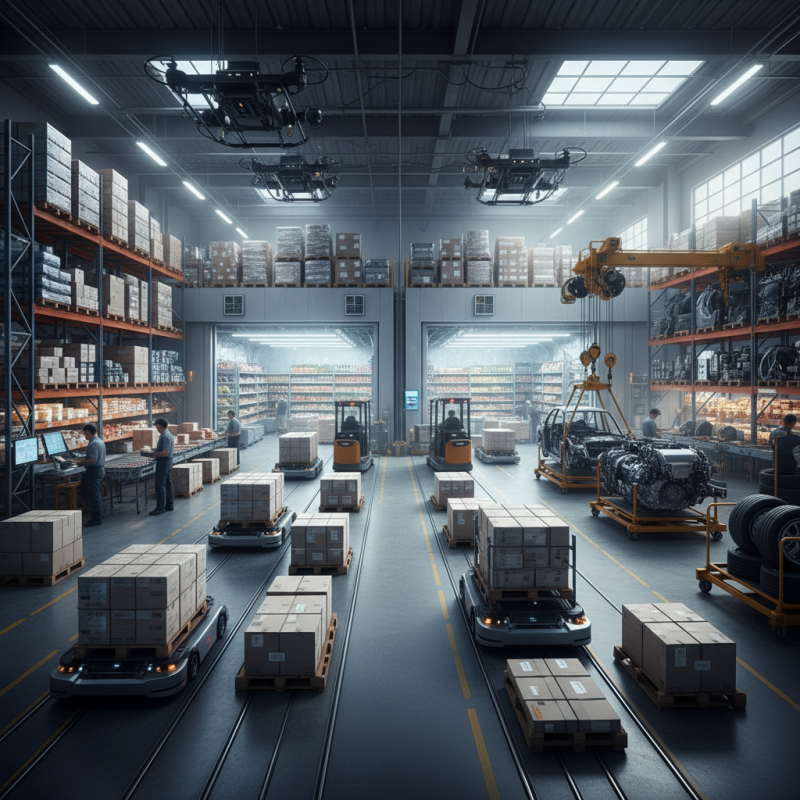
What Industries Depend on Warehouse Transport Equipment?

Types of Industries Utilizing Warehouse Transport Equipment

Warehouses play a vital role in several industries. Retail, manufacturing, and logistics heavily rely on warehouse transport equipment. According to a report by the Warehousing Education and Research Council, these sectors accounted for about 45% of warehouse operations in 2022. Each industry requires specific equipment for efficiency and productivity.

In retail, pallet jacks and forklifts are essential. They help move heavy merchandise quickly. The National Retail Federation indicated that a well-organized warehouse can reduce operational costs by up to 30%. Fast-moving consumer goods (FMCG) companies rely on automated guided vehicles (AGVs) for swift transportation. These machines enhance accuracy and safety in busy warehouses.

The manufacturing sector also depends on diverse equipment. Conveyor systems streamline the flow of products from production to storage. A study from the Material Handling Industry of America showed that proper material handling can boost productivity by over 25%. However, with these advancements come challenges, such as maintenance and the need for skilled operators. Many facilities struggle to meet these requirements, highlighting the importance of continuous training and evaluation.

Key Statistics on Warehouse Transport Equipment Market Growth

The warehouse transport equipment market is experiencing significant growth. Recent statistics indicate a surge in demand for various types of equipment. These include forklifts, pallet jacks, and conveyor systems. In 2023, the global market is projected to reach substantial value. As e-commerce flourishes, efficient transport equipment becomes essential for operations.

Industries relying heavily on warehouse transport equipment are diverse. Retail and manufacturing, among the largest users, prioritize speed and efficiency. According to experts, these sectors exhibit a growing need for innovative solutions. The rise of automation has also transformed warehouse logistics significantly. Companies are investing more in robotics and AI-driven systems to enhance productivity. However, challenges remain in workforce adaptation and training.

As the market evolves, not all equipment may meet emerging needs. Some companies may struggle to keep pace with technological advancements. Evaluating operational efficiency is crucial for long-term success. Industry stakeholders need to remain vigilant and reflective about their choices. Balancing cost and innovation will shape the future landscape of warehouse transport equipment.

Role of E-commerce in Expanding Warehouse Equipment Demand

The rise of e-commerce has significantly influenced the demand for warehouse transport equipment. According to a report by IBISWorld, warehouse equipment sales have seen a growth rate of over 4% annually. This surge is largely due to the need for efficiency in fulfillment centers. As online shopping becomes the norm, companies must adapt their logistics strategies to meet increasing consumer expectations.

The rapid expansion of e-commerce platforms has led to a greater need for material handling solutions. For instance, companies are investing in automated guided vehicles (AGVs) and conveyor systems to streamline operations. A study by ResearchAndMarkets indicates that the global warehouse automation market will surpass $30 billion by 2026. This reflects a pressing need to reduce costs while improving order accuracy and speed. However, businesses must carefully evaluate their choices. Automation can require substantial upfront investment and may not be suitable for all companies.

While the demand for advanced warehouse transport equipment is on the rise, some organizations struggle to keep up. The fast pace of technology can be overwhelming. Many companies find it difficult to integrate new systems with existing infrastructure. Challenges in workforce training also pose significant hurdles. These issues necessitate a thorough understanding of both operational needs and market trends to make informed investment decisions.

What Industries Depend on Warehouse Transport Equipment? - Role of E-commerce in Expanding Warehouse Equipment Demand

Industry Dependence on Warehouse Equipment (%) Major Equipment Used Expected Growth Rate (%)
E-commerce 85 Automated Guided Vehicles, Conveyor Systems 15
Retail 70 Forklifts, Pallet Jacks 10
Manufacturing 75 Forklifts, Conveyors, Racking Systems 8
Pharmaceuticals 60 Pallet Racks, Automated Storage 12
Food and Beverage 65 Refrigerated Racks, Order Pickers 9

Impact of Supply Chain Management on Warehouse Equipment Use

Supply chain management plays a crucial role in the effective utilization of warehouse transport equipment. According to a report by the Council of Supply Chain Management Professionals (CSCMP), approximately 79% of companies cite supply chain management as a significant factor in optimizing their operational efficiency. This statistic underscores the importance of integrating warehouse equipment into broader supply chain strategies.

The impact of efficient supply chain management is evident in various industries. For instance, the food and beverage sector relies heavily on temperature-controlled warehouse transport. Proper equipment can reduce spoilage rates by up to 30%. On the other hand, the consumer electronics industry faces challenges in maintaining inventory accuracy. Research from Logistics Management indicates that nearly 50% of firms struggle with inventory management. This gap reveals areas where improved warehouse equipment can foster greater accuracy and reliability.

A crucial point is that not all warehouses utilize advanced equipment effectively. Often, organizations underestimate the need for modern transport tools, leading to inefficiencies. A survey by Deloitte highlights that about 60% of companies have not upgraded their warehouse technology in recent years. This reluctance can hinder their supply chain resilience. Businesses must reflect on their equipment choices and consider how alignment with supply chain goals can lead to better outcomes.

Future Trends in Warehouse Transport Equipment Across Various Industries

The landscape of warehouse transport equipment is evolving rapidly. Emerging technologies are set to reshape how industries handle logistics and distribution. Automation is becoming crucial. According to a recent report by the Warehousing and Logistics Association, 75% of warehouses are experimenting with some form of automation. This shift aims to enhance efficiency and reduce human error.

Robotics is a key player in this transformation. Companies are investing heavily in robotic systems to streamline operations. For instance, a survey by the Robotics Industry Association found that 84% of companies believe robotics will improve their supply chain performance. However, not every implementation is seamless. Many businesses face challenges in integrating new technologies with existing systems. This can lead to inefficiencies and frustration.

Sustainability is another prominent trend. A growing number of industries are prioritizing eco-friendly practices. A study by the Sustainable Logistics Forum found that 62% of companies now view sustainability as a critical factor in equipment selection. This focus on the environment forces businesses to rethink traditional methods. Challenges remain in balancing cost and eco-friendliness, but the push for greener operations is undeniable.

FAQS

: What industries rely heavily on warehouse transport equipment?

: Key industries include retail, manufacturing, and logistics. They accounted for about 45% of warehouse operations in 2022.

How do pallet jacks and forklifts benefit the retail sector?

They help transport heavy merchandise quickly, reducing operational costs significantly. An organized warehouse can lower costs by 30%.

What role does e-commerce play in warehouse equipment demand?

E-commerce growth has driven higher demand for efficient fulfillment solutions. Companies are investing in automation to meet these needs.

Why is automation important for warehouses?

Automation enhances efficiency and reduces human error. Many warehouses are now experimenting with various automated systems.

What challenges do companies face when adopting new technologies?

Integrating new equipment with existing systems can be difficult. Businesses often encounter inefficiencies and training issues.

How does sustainability influence equipment selection?

Many companies now prioritize eco-friendly practices when choosing equipment. Balancing cost and sustainability remains a challenge.

What should companies consider before investing in automation?

They need to evaluate upfront costs and whether automation suits their specific operational needs and infrastructure.

How does robotics impact supply chain performance?

Many companies believe robotics enhances performance, streamlining operations. However, integration can be challenging and frustrating.

What productivity boost can proper material handling provide?

Effective material handling can increase productivity by over 25%. Yet, proper training and maintenance are critical.

What are the drawbacks of emerging warehouse technologies?

Rapid advancements can overwhelm organizations. Many struggle to adapt effectively to technological changes and workforce training needs.

Conclusion

Warehouse transport equipment plays a crucial role in various industries, streamlining operations and enhancing efficiency. Key sectors that rely on warehouse transport equipment include retail, manufacturing, and logistics, among others. As e-commerce continues to surge, the demand for advanced warehouse solutions has significantly increased, driving growth in the warehouse transport equipment market.

Statistics indicate a robust upward trend in market expansion, reflecting how supply chain management practices have evolved to incorporate more sophisticated equipment. Future trends suggest that innovations in automation and technology will further transform warehouse transport equipment usage across industries, underscoring the importance of understanding what industries rely on warehouse transport equipment to stay competitive in an increasingly dynamic marketplace.

Aria

Aria

Aria is a dedicated marketing professional with a deep passion for innovative strategies and a keen understanding of our company's product offerings. With a wealth of experience in the industry, Aria excels at crafting engaging content that highlights the unique features and benefits of our......