Warehouse handling equipment rarely has one fixed expiration date. A pallet jack working one quiet shift may age differently from a forklift moving heavy loads across cracked concrete every day. That is why the question “what is the lifespan of warehouse handling equipment” needs more than a number. Equipment type, workload, maintenance, operator habits, and storage conditions all shape its useful life.
A useful estimate starts with the machine’s duty cycle. Check operating hours, service records, battery condition, wheel wear, hydraulic leaks, and repair frequency. A forklift with a clean maintenance log may remain dependable for years, while a neglected conveyor can cause costly downtime much sooner. Small clues matter. A wheel that leaves rubber dust near a loading bay is telling you something.
A specific expert name and quotation should be verified before publication; no source was provided, so inventing one would weaken the article’s credibility. The practical guidance is straightforward: compare manufacturer recommendations with real inspection findings, not age alone. Then assess whether repairs, safety, and productivity still make sense.
There is no perfect cutoff. That part deserves honest attention. The sections ahead examine typical service-life ranges, the factors that shorten or extend them, and signs that replacement may be wiser than another repair.
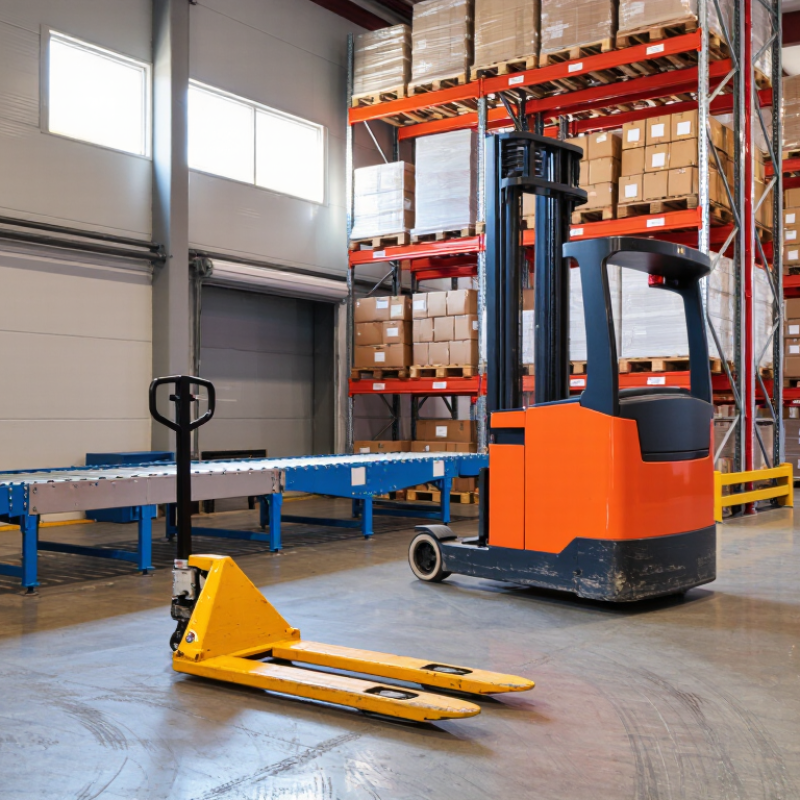
Warehouse handling equipment includes the tools and machines used to move, lift, store, or position goods inside a facility. Some items are simple: hand trucks, pallet jacks, carts, and ladders. Others are powered, such as forklifts, conveyors, order pickers, and lift tables. Storage equipment, including pallet racks and shelving, also supports material flow, though it does not move goods by itself.
The distinction matters when estimating service life. A hand pallet jack used occasionally on smooth floors faces different wear than a forklift running multiple shifts over rough concrete. Wheels, forks, chains, hydraulic parts, batteries, and controls can wear at different rates. Even the floor and load sizes make a difference. Small details matter.
Equipment condition is not judged by age alone. Operators can look for unusual noise, uneven lifting, damaged wheels, leaks, loose connections, or racks that appear bent. Maintenance records and daily inspection notes help reveal patterns, but records are sometimes incomplete. That is worth admitting. A machine may be old and dependable, or relatively new and already troublesome. How long it lasts depends on its design, workload, upkeep, and the quality of repairs.
Warehouse handling equipment includes the tools and machines used to move, lift, store, and transport goods within a facility. The service-life ranges below are planning estimates, not guarantees; actual life depends on duty cycle, load, environment, maintenance, and repair history.
| Equipment Type | Typical Service-Life Range | What Affects Its Lifespan? | Common Signs of Wear | Practical Maintenance |
|---|---|---|---|---|
| Manual pallet jack | 5–10 years | Frequency of use, floor condition, load weight, wheel material, and hydraulic-system care. | Leaking hydraulics, slow or uneven lifting, damaged forks, or worn wheels. | Inspect forks and wheels, keep moving parts clean, and address hydraulic leaks promptly. |
| Powered pallet truck | 5–10 years | Operating hours, load intensity, battery type and care, charging habits, and travel distance. | Reduced runtime, inconsistent travel or lifting, repeated faults, or excessive component wear. | Follow the battery maker’s charging guidance, inspect brakes and wheels, and keep service records. |
| Counterbalance forklift | 10,000–20,000 operating hours | Hours and intensity of use, load handling, operator practices, environment, and preventive maintenance. | Recurring breakdowns, poor braking or steering, mast problems, or rising repair costs. | Complete scheduled inspections and servicing; track engine or motor hours and repair history. |
| Reach truck | 10,000–20,000 operating hours | Shift patterns, lift height, aisle and floor conditions, battery care, and mast workload. | Unusual mast movement, hydraulic leaks, reduced battery runtime, or repeated control faults. | Inspect mast, forks, wheels, and safety systems; maintain the battery and follow service intervals. |
| Order picker | 8–15 years | Pick frequency, lift cycles, operator exposure, charging practices, and facility conditions. | Platform or control issues, unreliable lifting, excessive wheel wear, or recurring electrical faults. | Check the platform, guardrails, controls, wheels, and emergency systems at scheduled intervals. |
| Conveyor system | 10–20 years | Operating hours, throughput, conveyed material, dust or moisture, and quality of alignment and upkeep. | Repeated belt or roller failures, tracking problems, unusual noise, or frequent motor stoppages. | Inspect belts, rollers, bearings, guards, and drive components; correct misalignment early. |
| Scissor lift table | 10–20 years | Lift cycles, load distribution, corrosion, hydraulic-system condition, and operating environment. | Jerky movement, fluid leaks, damaged scissor arms, or failure to hold a raised position. | Check the structure, hoses, controls, and safety devices; follow the manufacturer’s inspection schedule. |
| Dock leveler | 10–20 years | Daily dock cycles, vehicle impact, load conditions, weather exposure, and inspection frequency. | Slow or uneven movement, damaged hinges or lips, fluid leaks, or visible structural wear. | Keep the pit clear, inspect safety features and moving parts, and arrange qualified repairs when needed. |
| Racking and shelving | 20–30+ years | Impact history, corrosion, installation quality, load limits, and changes to the storage layout. | Bent or cracked members, damaged uprights, loose connections, or missing safety components. | Display load limits, inspect regularly for impact damage, and repair or replace compromised components. |
| Reusable plastic pallet | 5–10+ years | Number of trips, load and handling method, outdoor exposure, temperature, and material condition. | Cracks, broken deck boards or runners, distortion, or instability under load. | Keep pallets within rated capacity and remove damaged units from service. |
| Steel roll container | 5–15 years | Rolling distance, floor quality, corrosion exposure, load weight, and wheel maintenance. | Wobbly or seized casters, damaged welds, bent frames, or unstable movement. | Inspect frame joints and casters; clean and replace worn wheels before they cause handling problems. |
How to use these estimates: Operating-hour figures are more useful than calendar age for heavily used powered trucks. Replace or rebuild equipment based on inspection results, safety, parts availability, downtime, and total repair cost—not age alone. Always follow applicable safety requirements and the equipment manufacturer’s maintenance instructions.
A pallet jack may last about 5–10 years. A forklift often provides 10,000–20,000 operating hours, or roughly 7–12 years. These are estimates, not guarantees.
Workload, load weight, floor condition, maintenance, and operator habits all matter. Rough concrete and heavy daily shifts can speed up wear.
Conveyors commonly last 10–20 years, while electric pallet trucks often last 5–10 years. Racks may remain in use for decades, but damage can make them unsafe sooner.
Look for cracked or bent forks, frayed chains, hydraulic leaks, loose steering, flat-spotted wheels, or longer stopping distances. New rattling matters, too.
No. Calendar age can mislead. Review operating hours, condition, repair history, and inspection results before deciding.
Check forks, wheels, brakes, chains, steering, controls, and hydraulic lines. Also note unusual sounds, slower lifting, and battery charging delays.
Remove it when a safety-critical defect appears. Ask a qualified technician to assess uncertain damage; a clean exterior can hide internal wear.
Log operating hours, faults, repairs, battery changes, and inspection findings. Compare them over time. Missing records should be acknowledged, not guessed away.
Compare repair costs with downtime, production losses, rental needs, energy use, and safety risks. Repeated faults deserve a second look.
Review forecasts quarterly and keep reserves for parts, labor, and unexpected downtime. A phased plan may be more realistic than replacing every unit at once.
This guide explains what counts as warehouse handling equipment, including the machines and tools used to move, lift, store, and transport goods within a facility. It explores the question “what is the lifespan of warehouse handling equipment” by comparing typical service life across equipment types, while emphasizing that no single timeline applies to every operation. Usage intensity, load conditions, operating environment, equipment quality, and maintenance practices can all affect how long equipment remains dependable.
The article also outlines warning signs of wear, such as recurring faults, reduced performance, unusual noises, and visible damage. Recognizing these risks early can help prevent unexpected downtime and support safer operations. For 2026, it recommends a practical approach to maintenance and replacement planning: keep inspection and repair records, assess equipment condition regularly, and weigh repair costs and reliability against the needs of the facility.

 IDD Motion