Choosing the right handling equipment can significantly impact efficiency and productivity. When you’re deciding how to choose between manual and electric handling equipment, several factors come into play. Understanding these factors will help you make an informed decision.
Manual equipment often offers simplicity and lower initial costs. It requires less maintenance and is usually easy to maneuver in tight spaces. However, it can be physically demanding over time. Conversely, electric equipment provides more power and efficiency for heavy loads. This can reduce physical strain on workers but comes with higher costs and maintenance needs.
Reflecting on your specific work environment is crucial. You must consider the weight of the loads, the frequency of use, and the training required for employees. Explore how each option aligns with your operational goals. This decision could shape your workplace’s dynamics and overall productivity. Understanding these trade-offs and benefits can lead to successful outcomes.
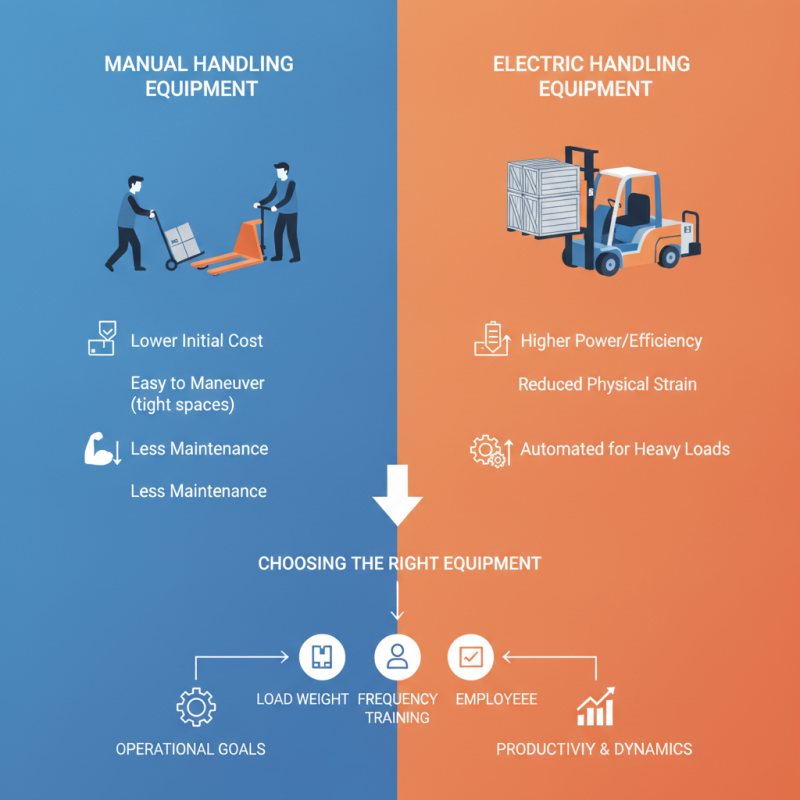
Understanding the Basics of Manual and Electric Handling Equipment
Choosing between manual and electric handling equipment can be challenging. Understanding the basics is essential for making informed decisions. Manual equipment relies on human effort. It's often simpler and costs less. In a survey by the Material Handling Industry of America, 68% of organizations still prefer manual tools for specific tasks. This preference shows a reliance on established methods.
Electric equipment offers enhanced efficiency. It requires less physical effort, thus reducing worker fatigue. A report from the Industrial Truck Association states that electric pallet jacks can improve productivity by up to 30%. This boost often outweighs initial costs. However, transitioning to electric systems may require training and infrastructure adjustments.
It's crucial to assess the context of use. Manual options may work well in small or confined spaces. Large operations might benefit from the speed of electric systems. Several companies face challenges in balancing these choices. The right equipment depends on the specific tasks and work environment.
Key Factors to Consider When Choosing Handling Equipment
When choosing between manual and electric handling equipment, certain key factors stand out. One vital aspect is operator safety. According to recent industry reports, nearly 30% of workplace injuries relate to manual handling tasks. Electric equipment often includes safety features that mitigate risks, reducing injury claims and improving overall workplace safety.
Another consideration is operational efficiency. Electric handling equipment can operate faster and with less human effort. Statistics indicate that electric tools can improve handling speed by up to 40% compared to manual alternatives. However, a higher initial investment comes with electric models. Companies must assess their budget against potential long-term efficiency gains.
Maintenance is also crucial. Manual equipment tends to require less maintenance than electric options. Yet, neglect can lead to a decline in efficiency and safety. Regular inspections and maintenance protocols are essential for all types of equipment. Balancing initial costs with maintenance needs is vital for making an informed decision. Each option has distinct advantages and challenges that require careful consideration.
Comparison of Manual vs Electric Handling Equipment
Advantages and Disadvantages of Manual Handling Equipment
Manual handling equipment has its advantages and disadvantages.
On the positive side, it often requires less maintenance than electric options.
This can save costs for businesses in the long run.
Manual equipment is also lighter and easier to maneuver in tight spaces.
Workers often appreciate the physical activity involved, which can promote health.
However, manual handling equipment isn’t without its drawbacks.
It may lead to worker fatigue, particularly during long shifts.
The risk of injury can increase if proper lifting techniques aren't followed.
Moreover, the efficiency of manual tools can be lower compared to electric ones.
This may slow down operations in high-demand scenarios.
In choosing between manual and electric equipment, organizations face a complex decision.
They must weigh the physical capabilities of their staff against productivity needs.
Finding the right balance is crucial for both safety and efficiency.
Benefits and Challenges of Electric Handling Equipment
Electric handling equipment offers several advantages. They are often more efficient than manual alternatives. According to a 2022 industry report, electric forklifts can reduce operating costs by up to 25%. This can be crucial for businesses aiming to improve their bottom line. Moreover, electric equipment tends to require less maintenance. They have fewer moving parts than their manual counterparts, which means fewer breakdowns.
However, there are challenges associated with electric handling equipment. Charging times can pose significant downtime in a hectic work environment. Some models often require several hours to recharge fully. This could disrupt workflow and logistics. Furthermore, initial investment costs for electric equipment are typically higher. Companies may hesitate due to the upfront costs despite potential long-term savings.
Another concern is capacity limitations. Electric models may have lower load capacities compared to manual options, especially for heavy-duty tasks. Buyers should carefully assess their operational needs. They must consider both current and future requirements. Proper evaluation of these aspects will provide better insight into whether electric handling equipment suits their operations.
Cost Analysis: Manual vs Electric Handling Equipment Options
When considering manual versus electric handling equipment, a thorough cost analysis is essential. According to a study by the Material Handling Industry (MHI), electric equipment can reduce labor costs by up to 30%. However, manual equipment often has lower upfront costs, making it an attractive option for budget-conscious businesses. A report from the Industrial Truck Association highlights that while electric models require power and maintenance, manual tools do not incur energy costs. This trade-off can affect long-term financial viability.
Maintenance costs should also be factored in. Electric equipment often requires specialized technicians for repairs, which can drive costs higher. Reports indicate that electric trucks have an average annual maintenance cost of $650, compared to just $250 for manual alternatives. The quicker wearable parts of manual tools might need less frequent replacement, adding to their appeal. However, overworking manual equipment can lead to faster degradation, a consideration that businesses must weigh.
Tip: Analyze your operational needs before making a choice. If you have high volume tasks, electric might offer greater efficiency. For lighter, more infrequent usage, manual handling tools could financially make more sense. Keep in mind that both types have strengths and weaknesses, and the choice should align with your specific financial and operational goals.
FAQS
: Operator safety is a key concern. Manual handling tasks account for about 30% of workplace injuries.
Electric tools can increase handling speed by up to 40% compared to manual options. They require less human effort.
Not necessarily. Electric models need a higher initial investment, which can be a barrier for some companies.
Manual equipment usually requires less maintenance. However, neglecting any equipment can decrease efficiency and safety.
Manual equipment is lighter, easier to maneuver, and requires less maintenance over time. This can save costs.
It can cause worker fatigue and has a higher injury risk without proper lifting techniques.
Organizations must evaluate their staff's capabilities against productivity demands to find a balance.
Regular inspections help maintain efficiency and safety for both electric and manual equipment.
Yes, some workers appreciate the physical activity, which can have health benefits.
Yes, the efficiency of manual tools may be lower, potentially slowing operations when demand is high.
Conclusion
When considering how to choose between manual and electric handling equipment, it is essential to understand the fundamental differences, including their operational mechanics and intended use cases. Key factors in the decision-making process include the specific needs of the workplace, the volume of materials handled, and the available budget.
Manual handling equipment offers advantages such as lower initial costs and ease of maintenance, but may present challenges like physical strain on workers. Conversely, electric handling equipment streamlines operations and reduces labor intensity but comes with higher initial investment and ongoing energy costs. Conducting a thorough cost analysis will help organizations evaluate which option aligns best with their operational goals and safety standards, ensuring a well-informed choice.

 IDD Motion