Electric forklifts are transforming the logistics industry. Their rising popularity is evident in warehouses and distribution centers globally. Understanding why electric forklifts are becoming more popular is crucial for businesses today.
These forklifts offer numerous advantages, including environmental benefits and cost savings. They produce zero emissions, which is essential for companies aiming to reduce their carbon footprints. Moreover, electric models often have lower operating costs. Their maintenance needs are less demanding than those of internal combustion engines.
However, not all industries are quick to adopt this technology. Some companies hesitate due to initial investment costs. Others fear performance limitations compared to traditional forklifts. Still, the trend towards electric forklifts persists. Businesses are reevaluating their operations and recognizing long-term benefits. In a world focused on sustainability, electric forklifts are not just a trend; they're becoming a necessity.
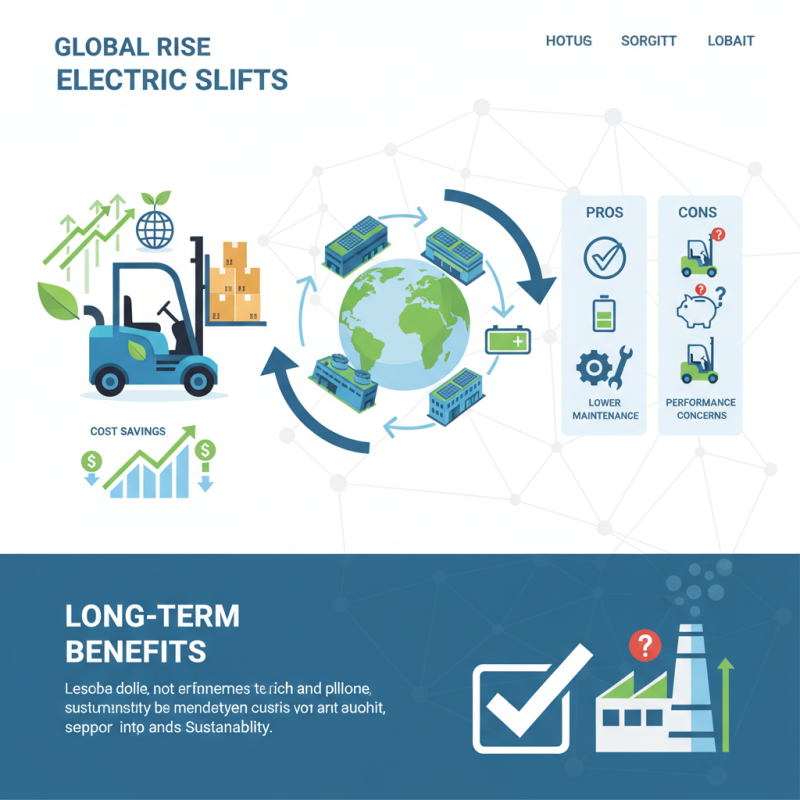
Electric forklifts are becoming increasingly popular across various industries. Their rise can be attributed to several key factors. A report from the Material Handling Industry of America states that the global electric forklift market is expected to grow at a compound annual growth rate of 6.5% from 2021 to 2028. This growth is driven by the shift towards sustainable practices among businesses.
One major reason for the adoption of electric forklifts is their lower environmental impact. Many companies aim to reduce carbon emissions. Electric forklifts generate zero emissions compared to their gas and diesel counterparts. Additionally, operating costs are lower due to reduced energy consumption. Research indicates that electric forklifts can save up to 30% in energy costs over their lifetime. However, it’s important to note that initial investment costs can be higher, which may deter some companies.
Another influencing factor is regulatory pressure. A growing number of governments are implementing stricter environmental regulations. Businesses must adapt quickly to remain compliant. This often leads to the adoption of electric forklifts. Yet, the need for worker training on electric systems can be a challenge. The transition requires time and resources, highlighting potential obstacles. The evolution of electric forklifts reflects both opportunities and complexities in the modern industrial landscape.
Electric forklifts are becoming a preferred choice in industries worldwide. Their environmental benefits play a significant role in this trend. Unlike traditional gas or diesel forklifts, electric models produce zero emissions. This makes them ideal for indoor operations and sensitive environments. Businesses are increasingly valuing cleaner air and reduced pollution.
The efficiency of electric forklifts contributes to sustainability. They are often quieter, minimizing noise pollution. This factor is crucial for urban operations where noise regulations are strict. Electric forklifts also require less maintenance, which reduces waste. Fewer moving parts lead to fewer emissions during the manufacturing process.
However, some challenges remain. Battery life and charging infrastructure can be issues for logistics managers. Users must ensure that their electric forklifts have sufficient charge for extended shifts. As technology evolves, manufacturers are addressing these hurdles. Continuous improvements are being made to enhance battery efficiency and reduce charging times. This ongoing development indicates a promising future for electric forklifts.
Electric forklifts are becoming increasingly popular due to their economic advantages. Many industries are turning to electric models for cost savings and efficiency. These forklifts typically require less maintenance than their gas-powered counterparts. This can lead to significant savings over time. The energy cost for charging is often lower than the fuel costs of traditional forklifts, making them a smart choice for many companies.
Effective planning is crucial when shifting to electric forklifts. Assessing your operational needs can lead to better decisions. Consider the size of your facility and the workloads. This evaluation can help in selecting the right model. Additionally, ensure proper charging stations are available. An inefficient charging setup can waste time and resources.
Maintenance remains essential, even for electric models. Regular checks can prevent costly breakdowns. Create a scheduled maintenance program to enhance reliability. This minimizes downtime and keeps operations running smoothly. Remember, the initial investment may be higher, but the long-term benefits are worth considering. Investing time and resources now can yield substantial returns in the future.
Electric forklifts are experiencing a surge in popularity globally. This trend can be linked to significant technological innovations that enhance their performance. For instance, advancements in battery technology have dramatically improved runtime and charging efficiency, making these forklifts more reliable than ever. Modern lithium-ion batteries can charge up to 70% in just an hour, allowing for very little downtime.
Another factor contributing to this trend is the integration of smart technology. Many electric forklifts now come equipped with IoT sensors. These sensors monitor performance and provide real-time data to operators. This allows for predictive maintenance, reducing unexpected breakdowns and minimizing costs. According to a report by the International Energy Agency, electric forklift sales increased by 28% in 2022, underscoring a clear shift towards sustainable solutions in warehousing and logistics.
However, the transition isn't without challenges. Some facilities still face obstacles in infrastructure upgrades. The initial investment for electric models may be higher. Yet, the total cost of ownership often favors electric options over time. Industry experts estimate that electric forklifts can save up to 30% in operational costs over their lifetime compared to traditional fuel-powered models. As companies increasingly recognize the importance of sustainability, electric forklifts are becoming essential tools in modern logistics.
Electric forklifts are becoming increasingly popular for various reasons. One major factor behind this trend is the evolving global regulatory landscape. Governments worldwide are now prioritizing sustainability and environmental protection. Many regulations now favor electric vehicles over their gas-powered counterparts, particularly in urban areas.
Regulatory initiatives encourage businesses to adopt cleaner technologies. Some cities have even introduced low-emission zones, pushing companies to shift toward electric options. This creates a sense of urgency for firms relying on traditional forklifts. However, not all businesses are prepared for such a transition. Some may face challenges in terms of charging infrastructure and battery management. These obstacles require serious consideration and planning.
In addition, regulatory incentives play a significant role. Governments are offering tax breaks and grants to businesses that invest in electric technologies. This financial support can significantly offset initial costs. Yet, some companies might still hesitate, worrying about long-term battery lifespan and maintenance expenses. Such concerns highlight the need for continuous learning and adaptation in this swiftly changing landscape.
| Region | Market Growth Rate (%) | Electric Forklift Adoption Rate (%) | Regulatory Initiatives |
|---|---|---|---|
| North America | 15 | 25 | Emission Reduction Standards |
| Europe | 20 | 40 | Green Deal Initiatives |
| Asia-Pacific | 18 | 30 | Clean Air Policies |
| Latin America | 10 | 15 | Sustainable Development Plans |
: Electric forklifts are popular due to cost savings and efficiency in many industries.
Electric forklifts require regular checks to prevent breakdowns. Maintenance is still essential.
Companies need to assess operational needs, facility size, and workloads. Efficient planning is crucial.
Charging electric forklifts is often cheaper than fueling gas-powered models. This leads to savings.
Yes, many governments prioritize sustainability. Regulations encourage businesses to adopt cleaner technologies.
Companies may struggle with charging infrastructure and battery management during the transition.
Tax breaks and grants are available for investing in electric technologies. These can offset costs.
Some worry about battery lifespan and maintenance costs. Continuous learning is necessary.
Creating a scheduled maintenance program minimizes downtime and avoids costly operational issues.
Proper charging stations must be available. Inefficient setups can waste valuable time and resources.
Electric forklifts are gaining popularity worldwide due to a combination of factors that enhance their appeal across various industries. One key reason why electric forklifts are becoming more popular is their environmental benefits, as they produce zero emissions, contributing to greener operations compared to traditional diesel or propane-powered options. Additionally, the economic advantages of electric forklifts, including lower operational costs and improved efficiency, make them an attractive choice for businesses looking to optimize their logistics and reduce long-term expenses.
Technological innovations have also played a significant role in enhancing the performance and reliability of electric forklifts, making them more competitive in the market. Furthermore, global regulatory trends are increasingly favoring electric forklift implementation, as policymakers encourage sustainable practices to mitigate climate change. As these factors continue to converge, the adoption of electric forklifts is expected to accelerate, transforming material handling in various sectors.

IDD Motion