Choosing equipment for a cold storage warehouse is not simply a matter of comparing prices. A freezer door that leaks, a rack that blocks airflow, or a forklift battery that loses power in low temperatures can disrupt daily operations. In practice, small purchasing errors often become expensive maintenance problems. That is why understanding how to select equipment for cold storage warehouses requires more than reading product brochures. It requires attention to temperature ranges, humidity, cleaning routines, worker movement, energy use, and long-term service support.
The right equipment should protect products while making work safer and more predictable. Insulated doors must close tightly. Racking should support the intended load without restricting circulation. Sensors need accurate readings, even when frost forms around storage areas. Forklifts and pallet trucks should match the floor surface, aisle width, and working temperature. These details matter.
Good decisions begin with real conditions.
This guide presents seven practical buying tips based on operational experience, equipment fundamentals, and risk-aware planning. It also encourages careful questioning. A cheaper unit may perform well, but not always under constant cold exposure. A premium system may appear reliable, yet prove difficult to repair locally. No checklist is perfect. Warehouse layouts change, staff habits differ, and overlooked details can affect performance. By examining specifications, supplier credibility, safety features, maintenance access, and total ownership costs, buyers can make more informed choices and build a colder, safer, and more efficient working environment.
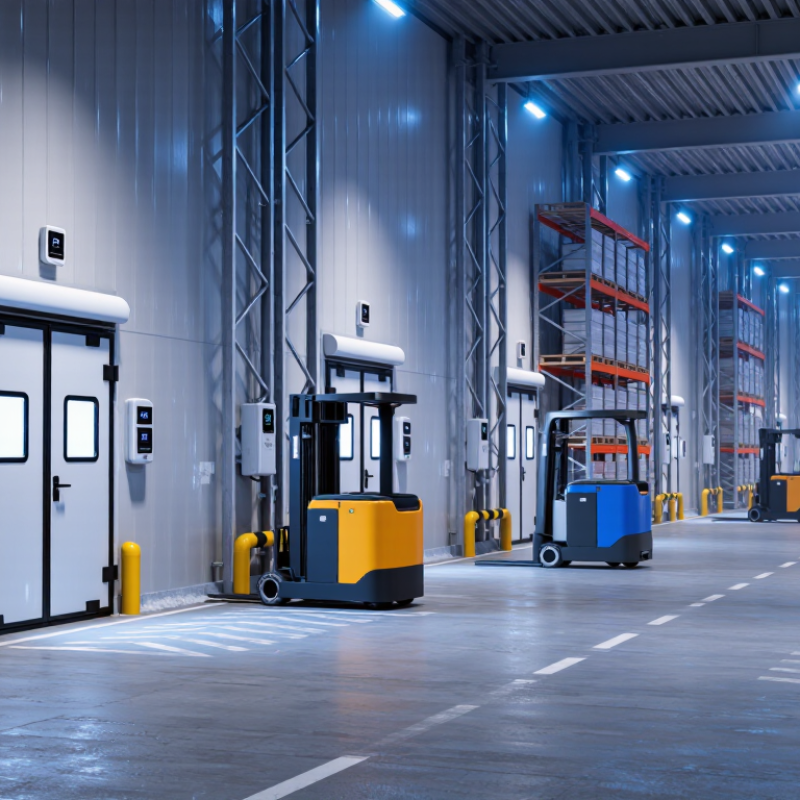
Before buying cold storage warehouse equipment, define the working conditions precisely. Record the required temperature range for every storage zone. Frozen goods may need far lower temperatures than chilled produce. Note humidity, door-opening frequency, product turnover, and peak loading periods. These details affect refrigeration capacity, flooring, shelving, lighting, and material-handling equipment. A warehouse receiving frequent deliveries also needs equipment that tolerates sudden temperature changes. Small assumptions can create large operating costs.
Tip: Map the daily workflow before selecting equipment. Measure aisle widths, doorway heights, turning areas, and loading dock space. Check whether forklifts can operate safely on wet or icy floors. Include battery performance in low temperatures, because cold conditions can reduce operating time. Specify corrosion-resistant surfaces and components where condensation is common. Keep thermometers and data loggers at several heights, not only near the entrance.
Temperature stability deserves practical testing. Place sensors near doors, corners, evaporators, and the highest storage level. Compare readings during loading, cleaning, and overnight operation. An equipment specification may look suitable on paper, yet fail during a busy shift. That happened in one planning review: the average temperature was acceptable, but warm air collected beside an active doorway. The layout required adjustment. Also consider sanitation routines, emergency access, alarm visibility, maintenance clearance, and staff training. Reliable decisions come from measured conditions, not guesses.
7 Best Cold Storage Warehouse Equipment Buying Tips
Insulation is the first buying decision, not an afterthought. High-density panels reduce heat gain and help compressors run less often. Check panel thickness, joint seals, vapor barriers, and floor insulation. A small gap near a door can undermine an expensive wall system. In site assessments, I look for condensation around seams and uneven floor temperatures. These details often expose installation weaknesses.
Temperature control must match the stored product. Use calibrated sensors at warm, cold, and high-traffic points. Independent alarms should record temperature changes during loading. The International Institute of Refrigeration estimates that refrigeration uses about 17% of global electricity. Efficiency, therefore, affects both operating costs and environmental performance. The figure is broad, but it remains useful for comparing equipment choices. Perfect control is rarely achieved.
Tip: Compare seasonal efficiency, not only rated capacity. Tip: Request full-load and part-load energy data. Tip: Test door opening frequency before sizing refrigeration. Tip: Choose variable-speed controls where demand changes. Tip: Inspect insulation certificates and seal quality. Tip: Verify sensor calibration procedures. Tip: Review service access and maintenance intervals. UNEP’s 2023 Global Cooling Watch report projects cooling demand could more than triple by 2050. That pressure makes efficient equipment increasingly important. Still, the most efficient unit can waste energy if doors stay open, sensors drift, or defrost cycles are poorly configured. Evaluate the complete system, including controls, insulation, lighting, and daily warehouse habits.
Select racking, shelving, and handling equipment around your coldest working zone. The GCCA’s Global Cold Storage Capacity Report measured worldwide capacity at about 719 million cubic metres. That scale makes poor space planning expensive. Choose corrosion-resistant frames, sealed bearings, and surfaces that tolerate condensation. Check every component’s rated load at low temperatures, not only at room temperature.
Use selective racking when product variety matters. Choose drive-in or mobile systems when pallet density matters more. Keep evaporators, doors, and fire-protection clearances clear in the layout. Adjustable shelving suits cartons and cases, while pallet racking suits stable unit loads. Aisle width must match the turning radius of the chosen truck. Measure this physically. Drawings can mislead.
For material handling, compare lift height, battery performance, braking, and operator visibility. The MHI 2024 Annual Industry Report identified persistent pressure to improve efficiency and manage workforce challenges. Automation may help, but it is not automatically suitable for every freezer. Test equipment during a full shift, including defrost cycles. I have seen buyers overvalue maximum capacity and undervalue maintenance access. That mistake returns later. Record temperatures, travel distances, pallet weights, and loading frequency before requesting quotations. Recheck those assumptions after one month of operation.
Buying cold storage warehouse equipment requires more than comparing load capacity and price. Safety features should work in freezing conditions, not only in showroom demonstrations. Check emergency stops, warning alarms, protective guards, and non-slip platforms. Test controls while wearing insulated gloves. Small buttons can become difficult to operate.
Hygiene deserves equal attention. Choose equipment with smooth, sealed surfaces and minimal exposed fasteners. Welded joints should not trap moisture, frost, or food residue. Corrosion-resistant materials are valuable, especially near washdown areas. Ask whether the design supports routine cleaning and drying. Floor equipment should have washable wheels and accessible undersides. I once overlooked a narrow underside gap; cleaning it took far longer than expected. That was a useful mistake.
Durability depends on the cold room itself. Inspect door seals, cables, batteries, lubricants, and display screens at the lowest operating temperature. Request documented load tests, temperature ratings, maintenance intervals, and replacement-part availability. Review service records from similar environments when possible. Equipment that performs well at room temperature may weaken under constant frost, vibration, and heavy loading. Leave enough clearance for inspection and repairs. A cheaper unit can become expensive when a damaged seal increases heat loss. Ask for practical demonstrations, not only certificates. Personal observation still matters.
Cold storage equipment should be priced as an installed system, not as separate machines. Ask for detailed estimates covering delivery, floor preparation, electrical upgrades, drainage, testing, and staff training. A freezer room may need stronger panels and specialized door heaters, which can increase labor costs. Request the installation schedule in writing. Do not trust vague allowances.
During site visits, check whether technicians leave enough clearance around compressors, evaporators, and control panels. Small gaps matter. Easy access reduces future repair time. My early estimates were too optimistic because I ignored overnight commissioning and temporary product relocation. That mistake was expensive. Compare maintenance needs before choosing equipment. Inspect door seals, clean condenser coils, test temperature sensors, and review defrost settings regularly. Ask for realistic service intervals, replacement-part prices, and expected energy use under normal loading.
Supplier support often decides whether a small fault becomes a serious loss. Confirm response times, emergency coverage, remote diagnostics, technician locations, and warranty exclusions. Get it documented. A dependable supplier should provide commissioning records, operating instructions, maintenance checklists, and practical staff training. Ask how quickly common parts can arrive during holidays or severe weather. Also request references from facilities with similar temperatures and operating hours. One overlooked detail is software access: unclear permissions can delay troubleshooting. I would also budget for an independent inspection after installation, even when the supplier seems experienced. Fresh eyes can find uneven temperatures, loose wiring, or poor door alignment before daily operations expose them.
Practical comparison of commonly purchased cold storage warehouse equipment. Cost ranges are indicative U.S. market estimates for small-to-medium facilities and vary by capacity, temperature, site conditions, labor rates, and local regulations.
| Equipment Category | Typical Use | Indicative Purchase Cost | Typical Installation Cost | Maintenance Needs | Supplier Support to Request | Key Buying Tip |
|---|---|---|---|---|---|---|
| Insulated Cold-Room Doors | Separates refrigerated or frozen rooms while limiting air leakage and temperature fluctuation. | US$2,000–US$9,000 per door, depending on size, insulation, hardware, and traffic rating. | US$800–US$3,000 per door, including framing adjustments and hardware setup. | Inspect gaskets, hinges, closers, safety releases, and door alignment monthly. Replace worn seals promptly. | Door-sizing guidance, replacement gasket availability, emergency hardware service, and installation documentation. | Choose a door rated for the expected opening frequency and temperature. A high-speed or sliding design may reduce infiltration in busy areas. |
| Refrigeration Condensing Unit | Provides the compressor and heat-rejection capacity required for medium- and low-temperature rooms. | US$8,000–US$35,000 per system, depending on cooling capacity, refrigerant, controls, and efficiency. | US$5,000–US$20,000, including refrigerant piping, electrical work, commissioning, and controls. | Schedule professional inspection at least twice a year. Check refrigerant charge, oil level, electrical connections, coils, vibration, and alarms. | Load calculation, refrigerant compliance information, commissioning report, service response times, and spare-parts planning. | Buy based on a verified heat-load calculation rather than room volume alone. Oversizing can increase cycling, humidity problems, and energy consumption. |
| Evaporator Unit and Fans | Distributes cooled air throughout the room and removes heat from stored products and surrounding air. | US$3,000–US$18,000 per unit, depending on capacity, coil design, defrost method, and corrosion protection. | US$2,000–US$10,000, depending on ceiling access, piping distance, drainage, and electrical requirements. | Clean coils and fan guards, inspect motors, test defrost cycles, clear drain lines, and check for ice buildup every one to three months. | Airflow and throw calculations, defrost programming, condensate-drain guidance, startup testing, and fan-motor availability. | Match coil selection and fan capacity to the product’s temperature and humidity requirements. Excessive airflow can cause product dehydration. |
| Cold-Room Racking and Shelving | Maximizes storage density while maintaining safe access and adequate airflow around products. | US$80–US$300 per pallet position for standard systems; specialized mobile or corrosion-resistant systems cost more. | US$20–US$100 per pallet position, depending on height, anchoring, layout, and seismic requirements. | Inspect beams, uprights, anchors, load labels, corrosion, and impact damage at least annually and after collisions. | Layout drawings, load-rating documentation, installation supervision, safety inspections, and replacement components. | Confirm the rack material and finish are suitable for condensation, washdown, and low temperatures. Preserve required aisle and airflow clearances. |
| Dock Leveler and Insulated Dock Equipment | Bridges the height gap between the warehouse floor and delivery vehicles while reducing temperature infiltration. | US$6,000–US$18,000 per dock position for common mechanical or hydraulic configurations. | US$3,000–US$12,000, excluding major concrete cutting, structural changes, or electrical upgrades. | Lubricate moving parts, inspect lips and springs, test safety restraints, and check seals and bumpers every three to six months. | Pit or edge-of-dock survey, load-rating confirmation, operator training, safety certification, and rapid repair coverage. | Select a capacity above the combined weight of the vehicle, forklift, and heaviest load. Include dock seals to reduce warm-air entry. |
| Temperature Monitoring and Alarm System | Tracks room and product-zone temperatures and alerts staff to failures, excursions, or open doors. | US$1,500–US$12,000 for sensors, gateway, software, displays, and basic alarm functions. | US$500–US$5,000, depending on sensor quantity, wiring, network access, and calibration requirements. | Verify sensor calibration at least annually, test alarms monthly, replace batteries, and review data logs regularly. | Calibration certificates, data-retention terms, mobile notifications, technical training, cybersecurity information, and system integration support. | Use independent sensors in critical zones and require documented alarm escalation. Battery backup and offline data storage improve resilience during outages. |
| Backup Generator and Automatic Transfer Switch | Maintains refrigeration, monitoring, lighting, and essential warehouse systems during utility interruptions. | US$15,000–US$75,000 for a commercial standby generator and transfer equipment, excluding major fuel-system work. | US$8,000–US$40,000, including foundations, electrical connections, exhaust, fuel supply, permits, and testing. | Perform scheduled load tests, battery checks, oil and filter service, fuel-quality checks, and annual professional inspections. | Load-bank testing, permitting assistance, preventive-maintenance contracts, emergency dispatch, and guaranteed parts availability. | Size the generator for compressor starting current, not only running watts. Prioritize refrigeration and monitoring loads before nonessential equipment. |
Cost figures are planning estimates only. Obtain a site survey, refrigeration load calculation, code review, written warranty, service-level agreement, energy-performance data, and a complete installation quote before purchasing.
Record temperature ranges for each storage zone. Measure humidity, door openings, product turnover, and peak loading times. Map aisle widths, doorway heights, turning areas, and dock space. Small assumptions can create large costs.
Place sensors near doors, corners, evaporators, and high storage levels. Compare readings during loading, cleaning, and overnight operation. An average reading may hide warm air near an active doorway. Test during busy shifts.
Check panel thickness, joint seals, vapor barriers, and floor insulation. Inspect seams for condensation. A tiny gap near a door can weaken the whole system. Do not rely only on certificates. Inspect the installation.
Compare seasonal efficiency, full-load data, and part-load performance. Test door-opening frequency before sizing the refrigeration system. Variable-speed controls may help when demand changes. Perfect control is unlikely.
Use calibrated sensors at warm, cold, high-traffic, and high-level locations. Independent alarms should record temperature changes during loading. Keep thermometers and data loggers at several heights. Sensor drift is easy to overlook.
Include delivery, floor preparation, electrical upgrades, drainage, testing, and staff training. Some freezer rooms need stronger panels and heated doors. Request a written installation schedule. My early estimates were too optimistic.
Leave clearance around compressors, evaporators, and control panels. Accessible components reduce repair time. Review door seals, condenser cleaning, sensor testing, and defrost settings. Small gaps matter.
Confirm emergency coverage, response times, remote diagnostics, and technician locations. Ask about warranty exclusions and replacement-part delivery times. Request commissioning records, instructions, checklists, and practical training. Get everything documented.
Choosing the right equipment is essential for building a reliable and efficient cold storage warehouse. The process begins by defining storage requirements, including product types, capacity, temperature ranges, humidity levels, workflow, and available space. When learning how to select equipment for cold storage warehouses, compare insulation quality, temperature control accuracy, and energy efficiency to reduce operating costs while maintaining stable conditions. Equipment should support consistent performance even during frequent loading and unloading.
Next, select racking, shelving, and material handling systems that match product dimensions, load capacities, and movement patterns. Safety features, hygienic materials, corrosion resistance, and overall durability are also important, especially in demanding low-temperature environments. Before making a purchase, assess installation expenses, maintenance schedules, spare-part availability, warranty coverage, and supplier support. A well-planned selection process helps improve storage organization, protect inventory, enhance worker safety, and achieve dependable long-term warehouse performance.

IDD Motion