How to Choose Manual or Electric Handling Equipment?

Time:2026-11-11 Author:Madeline
0%

Choosing between manual and electric handling equipment is not just a question of purchase price. It means matching the tool to the load, travel distance, work pace, and people using it. Peter Drucker, a respected management expert, once warned, “There is nothing so useless as doing efficiently that which should not be done at all.” His point is relevant: adding power will not fix a poorly planned workflow. Start by watching a typical shift. How far does a pallet travel? How often does an operator lift, push, or turn? Does the route include a narrow doorway or a sloped floor?

Manual equipment can suit short trips, lighter loads, and occasional moves. It is often simpler to maintain and less costly to buy. Electric equipment may reduce physical effort during frequent moves, longer routes, or demanding shifts. But it brings charging, servicing, and operator-training needs. There is no universal winner.

The practical question is how to choose between manual and electric handling equipment for your actual site. Compare the full operating cost, not just the price on the quote. Consider load weight, daily move count, aisle width, floor condition, and available charging space. Then trial the equipment with the people who will use it. A short test can reveal awkward controls or poor visibility that a specification sheet misses. And sometimes, the first estimate is wrong. Recheck it.
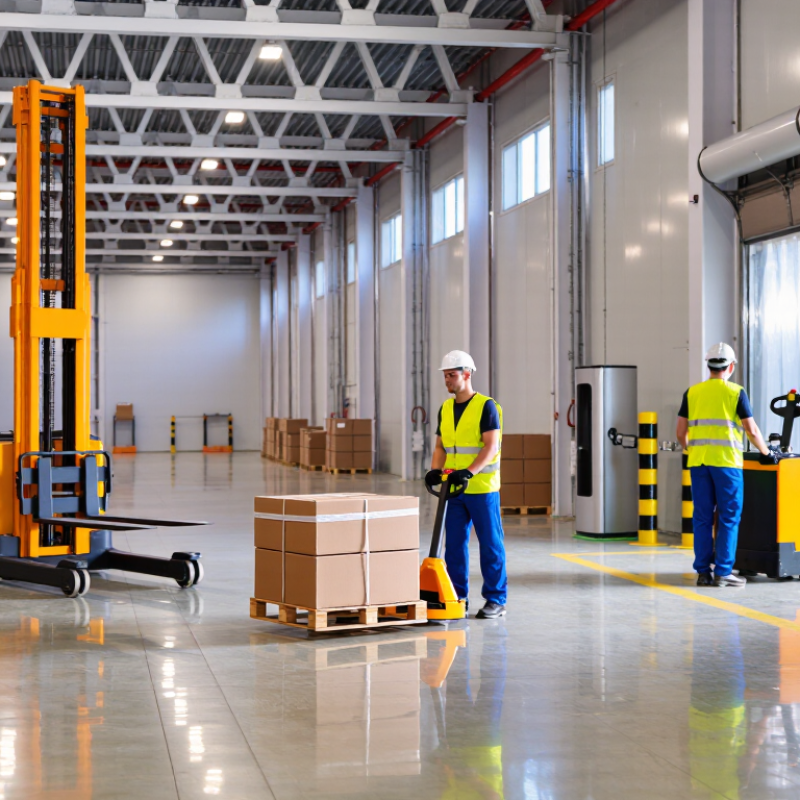
How to Choose Manual or Electric Handling Equipment?

Identify the Load, Travel Distance, and Handling Frequency

Start with the load, not the equipment catalogue. Record its weight, dimensions, shape, and center of gravity; a dense crate and a long panel behave differently. Include packaging and attachments, and consider the heaviest likely item rather than relying on an average. Small loads deceive. A load that is light on paper may still be awkward to grip, block a clear view, or shift when turned. If the contents move, note that too. Initial estimates can be wrong, so check real loads on the floor before choosing equipment capacity.

Then map the travel distance and route. Moving a pallet three metres along a smooth, level aisle differs from pushing it across a warehouse all shift. Measure turns, thresholds, slopes, and the space needed to stop or position the load. Manual equipment may suit short, occasional moves with manageable effort. Electric equipment is often more practical for long, frequent trips or heavier loads, but it still needs charging, maintenance, and room to maneuver. Count moves per hour and per shift, not just daily totals. A quiet morning can hide a demanding afternoon. Compare the task with the operator’s posture and pace; numbers alone may miss strain. If conditions vary, trial both options during normal work and note what proves difficult.

Assess the Workplace Layout and Operating Conditions

Map the route from storage to the point of use, not just the distance across the warehouse. Measure aisle width, door openings, turning space, and floor transitions. A loaded unit may clear a doorway but still struggle to turn beside a workbench. Small details matter. Check for slopes, uneven joints, wet patches, and thresholds that could affect control.

Manual equipment can suit short, occasional moves on level floors, especially where aisles are tight or charging access is limited. Electric equipment may be more practical for repeated trips, longer routes, or sustained movement of heavier loads. Yet the choice is not only about load capacity. Consider pedestrian traffic, visibility at corners, noise restrictions, and how much room operators have to stop safely. A busy route may demand slower speeds and clearer separation, regardless of power source.

Look at the whole shift. Repeated pushing can tire workers, while electric equipment needs suitable charging space and a routine for checking its condition. Include peak periods, not only a quiet inspection. It is easy to overvalue a smooth test run; real floors collect debris, and routes change when stock arrives. Record these conditions, then trial the equipment on the actual path with a representative load. A short trial may still miss seasonal congestion, so review the choice after normal operations begin.

Compare Manual and Electric Equipment Capabilities

Manual and electric handling equipment solve different problems. A hand pallet truck can move a few loads across a smooth warehouse floor without needing a charger. It is simple. It also depends on the operator’s strength, especially when turning a loaded truck or crossing a threshold. Repeated trips can slow a shift and increase fatigue. Electric pallet trucks reduce that effort and can support steadier movement over longer routes, but they need charging, routine checks, and space for safe maneuvering.

Compare more than the rated capacity. A manual unit may handle an occasional heavy load well, while frequent lifting or long travel distances can make the task tiring. Electric models vary in lift height, travel speed, battery runtime, and control layout. Check those details against the actual load, aisle width, floor condition, and shift length. For example, a narrow aisle with tight turns may favor compact equipment, regardless of its power source. That is easy to overlook. Operators also need training that matches the controls and workplace conditions. If charging access is unreliable, electric equipment may cause delays; if loads are moved only occasionally, its added systems may bring little practical benefit. A site assessment can reveal gaps, though measurements on paper do not always reflect a crowded shift.

How to Choose Manual or Electric Handling Equipment?

Compare Manual and Electric Equipment Capabilities

Electric equipment is generally better suited to repetitive handling and reducing operator effort, while manual equipment needs no battery charging and can suit occasional, lighter-duty work. Ratings are indicative relative assessments, not standardized specifications; actual performance depends on the equipment model, load, floor conditions, and work cycle.

Evaluate Safety, Ergonomics, and Operator Requirements

Choosing between manual and electric handling equipment starts with the task and the person doing it. OSHA’s ergonomics guidance highlights force, repetition, and awkward posture as factors that can contribute to musculoskeletal injuries. A manual trolley may suit short, smooth routes with light loads. But repeated pushing, tight turns, or ramp work can strain shoulders and backs. That matters. Liberty Mutual’s 2023 Workplace Safety Index, based on 2020 data, estimated that overexertion involving outside sources cost employers $12.8 billion in direct costs.

Electric equipment can reduce physical effort, but it is not automatically safer. Operators need training to control acceleration, braking, and visibility around corners. Check whether the handle height, controls, and turning radius suit the people who will use it. Consider gloves, shift length, floor condition, and whether operators must share narrow aisles. Test the route.

A practical assessment should include a real load, not an empty demonstration. Watch an operator start, stop, turn, and park the equipment; note awkward reaches and near-collisions. Compare those observations with load weight, travel distance, and daily use frequency. Charging and maintenance also affect electric options, while manual equipment still demands repeated human effort. I would not choose by purchase price alone; that misses the strain hidden in an ordinary shift. A short trial may reveal problems the specification sheet does not.

Select Equipment Based on Total Cost and Long-Term Needs

Choosing manual or electric handling equipment by purchase price alone can hide the real cost. A manual pallet truck may suit a small storeroom with short, occasional moves. But repeated trips across a long warehouse floor can increase labor time and physical strain. Electric equipment costs more upfront and needs charging, inspections, and trained operators. Those expenses belong in the comparison.

Estimate the total cost over the equipment’s expected working life. Include purchase price, maintenance, batteries, downtime, and the cost of moving each load. For example, count daily trips, travel distance, load weight, and busy periods. A simple log from one ordinary week can reveal more than a guess. The spreadsheet won't catch everything. Ask operators where delays happen, and check whether charging points or narrow aisles limit electric equipment.

Long-term needs matter too. A growing operation may soon handle more loads or longer shifts, making electric assistance worthwhile. A stable site with light use may not recover the extra cost. Test equipment in the actual work area when possible, and compare service requirements before deciding. That estimate may be wrong. Revisit it after a few months, especially if workload, staffing, or layout changes.

FAQS

When is a manual pallet truck a practical choice?

It can suit occasional moves over short, smooth routes. No charger is needed. Repeated trips can tire the operator, though.

What benefits can electric pallet trucks provide?

They reduce pushing effort and support steadier travel over longer routes. They still need charging, checks, and room to maneuver.

Should rated capacity decide which equipment to choose?

No. Compare lift height, travel distance, aisle width, floor condition, and shift length. A high capacity rating alone says little.

How can manual equipment affect operator comfort?

Repeated pushing, tight turns, and ramps can strain shoulders and backs. Small loads can add up across a shift.

Is electric equipment automatically safer?

No. Operators need practice with acceleration, braking, and visibility around corners. Narrow aisles can still create awkward situations.

What should a workplace trial include?

Use a real load. Watch the operator start, stop, turn, and park. Note awkward reaches and near-collisions.

How should charging and maintenance affect the decision?

Check charging access and routine maintenance needs. Unreliable charging can cause delays. That detail is easy to miss.

Is purchase price enough to compare equipment?

No. Consider effort, usage frequency, and route conditions too. A short trial may reveal issues a specification sheet misses. I might overlook something.

Conclusion

Choosing the right handling equipment begins with understanding the load, how far it must travel, and how often it will be moved. The workplace layout and operating conditions also matter: narrow aisles, floor surfaces, slopes, available storage, and indoor or outdoor use can affect which equipment is practical. These details help clarify whether manual equipment can handle the task efficiently or whether powered assistance is needed.

When deciding how to choose between manual and electric handling equipment, compare their capacity, maneuverability, operating effort, and suitability for the work environment. Consider operator safety and comfort, training needs, and how frequently the equipment will be used. Finally, look beyond the purchase price to include maintenance, energy, and expected service life. The best choice is the one that meets current handling demands safely and reliably while supporting the workplace’s long-term needs.

Madeline

Madeline

Madeline is a dedicated marketing professional with a wealth of expertise in our company's core offerings. With a keen understanding of the industry, she brings a unique perspective to her role, consistently delivering high-quality content that highlights the superior aspects of our products. As......