In today's industrial landscape, businesses face critical decisions regarding equipment. One significant consideration is the choice between electric and diesel forklifts. Many organizations grapple with understanding what is the difference between electric and diesel forklifts. This decision impacts not just efficiency, but also costs and environmental considerations.
Electric forklifts are often lauded for their quiet operation and reduced emissions. They are ideal for indoor use, where air quality is vital. Conversely, diesel forklifts are powerful and suited for outdoor tasks. However, they produce emissions and noise that can be detrimental in sensitive environments.
Choosing the right forklift type is not straightforward. While diesel may provide higher power for heavy loads, electric options offer lower running costs. Businesses must weigh these factors carefully. Their choice will influence operational efficiency, cost-effectiveness, and compliance with environmental regulations. Understanding these critical differences can guide companies toward smarter, more sustainable decisions.
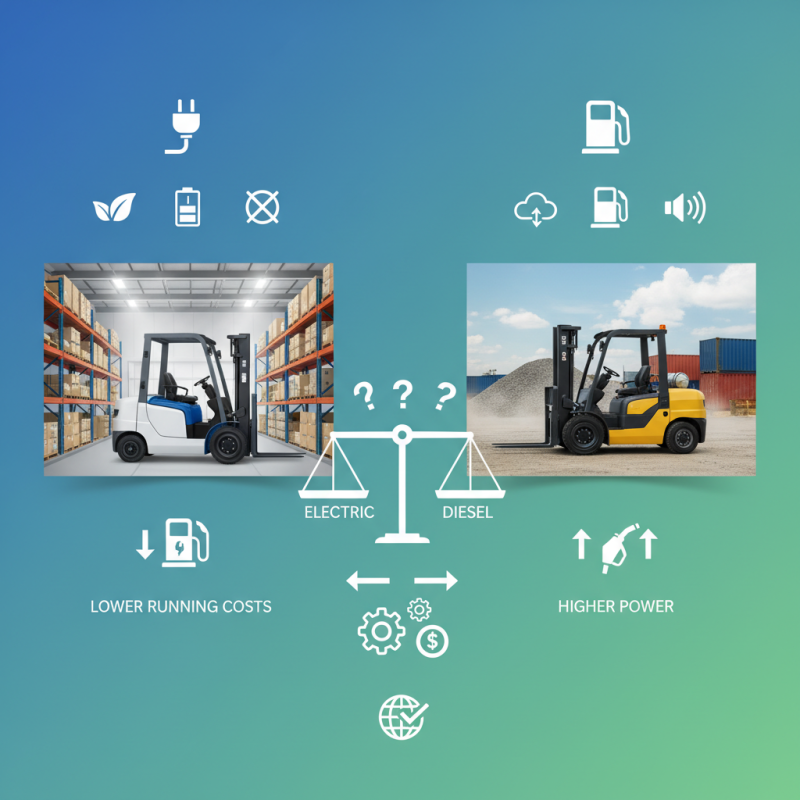
Electric forklifts and diesel forklifts have distinct differences that can significantly impact your business operations. Electric forklifts are quieter and produce zero emissions while in use. This can create a healthier work environment, especially in indoor settings. They typically require less maintenance due to fewer moving parts, which can contribute to reduced downtime. However, electric models may need more frequent battery charging, impacting productivity.
On the other hand, diesel forklifts have the advantage of providing more power, making them suitable for heavy-duty operations. They can run for longer periods without needing to recharge. However, diesel forklifts emit fumes and noise that can affect worker comfort and health. Also, the maintenance costs for diesel engines can be higher over time due to more complex machinery.
Choosing between these two options involves weighing your specific operational needs against their advantages and challenges. It is vital to consider the environment in which the forklift will operate and how each type aligns with your sustainability goals. The decision is not as simple as it seems; careful evaluation is necessary. Each choice comes with its pros and cons that deserve your attention.
| Feature | Electric Forklifts | Diesel Forklifts |
|---|---|---|
| Energy Efficiency | Higher energy efficiency, lower operational costs | Less energy efficient, higher fuel costs |
| Maintenance | Lower maintenance needs | Requires more frequent maintenance |
| Environmental Impact | Zero emissions, better for indoor use | Higher emissions, less suitable for indoor use |
| Noise Level | Quieter operation | Louder operation |
| Initial Cost | Higher initial investment | Lower initial investment |
| Range of Use | Ideal for indoor and short-range applications | Better for heavy-duty outdoor tasks |
: Electric forklifts are quieter, produce zero emissions, and require less maintenance due to fewer moving parts.
Diesel forklifts provide more power and can run longer without needing to recharge, making them suitable for heavy-duty tasks.
Diesel forklifts emit harmful pollutants that can worsen air quality and contribute to respiratory issues for workers indoors.
Yes, electric forklifts can lower greenhouse gas emissions by up to 60% compared to diesel models, enhancing sustainability.
Diesel forklifts often have higher maintenance costs due to their complex machinery, which can lead to increased repair expenses.
Initial purchase prices for electric forklifts can be high, causing companies to rethink their investment despite long-term savings.
Some businesses worry about battery performance under heavy-duty conditions and the need for adequate charging infrastructure.
Electric forklifts generally have lower operating costs and more stable energy expenses, making budgeting easier for businesses.
Electric forklifts may not be ideal if space is limited, especially when it comes to charging options and infrastructure availability.
Many electric forklift models can operate a full shift on a single charge, reducing downtime associated with refueling.
The article "Why Choose Electric Over Diesel Forklifts for Your Business?" provides a comprehensive overview of the distinctions between electric and diesel forklifts. It begins by outlining the basic differences, highlighting that electric forklifts typically offer quieter operations and reduced emissions, while diesel forklifts excel in power and longevity for heavy-duty tasks. The key benefits of electric forklifts for warehouse operations include improved efficiency, better maneuverability, and lower operating costs.
Additionally, the environmental impact is a significant consideration, with electric forklifts contributing to reduced air pollution compared to their diesel counterparts. From a financial perspective, the cost analysis reveals that electric forklifts can result in long-term savings through lower fuel costs and reduced maintenance needs. Finally, the maintenance considerations emphasize the advantages of electric forklifts, which generally require less upkeep than diesel models. This leads to the essential question of what is the difference between electric and diesel forklifts, guiding businesses toward more sustainable and cost-effective choices for their operations.

 IDD Motion